Work Completed on Phase One of Humber Valley Trail to Man in the Mountain

Paul WylezolUncategorized

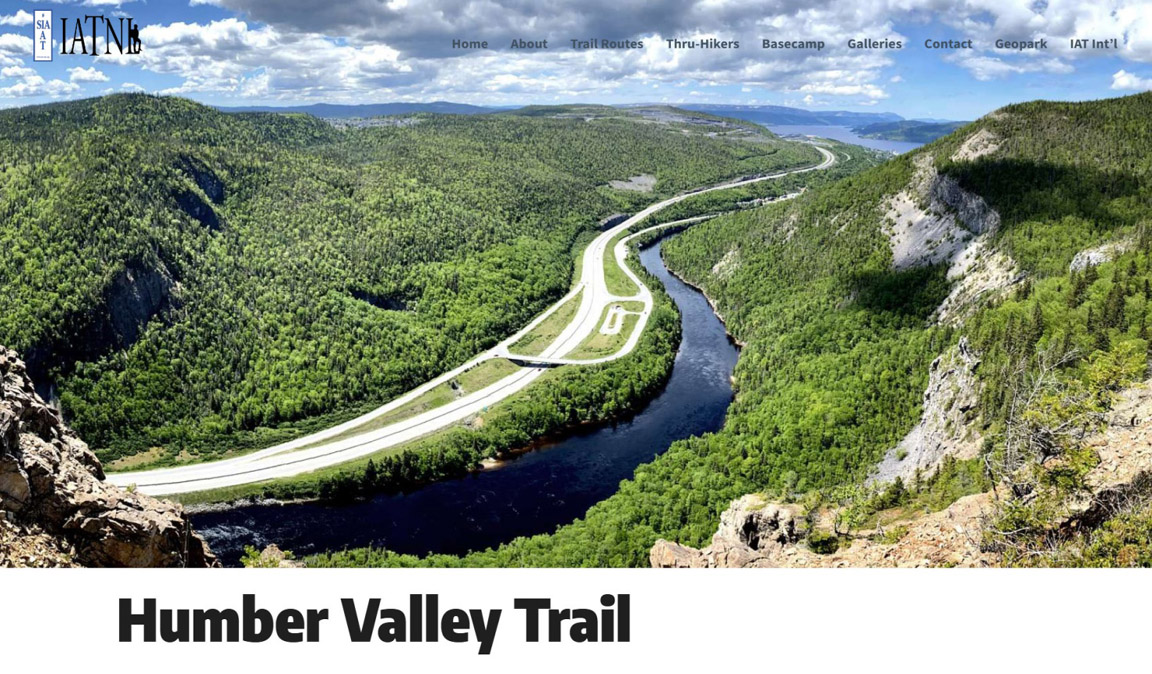
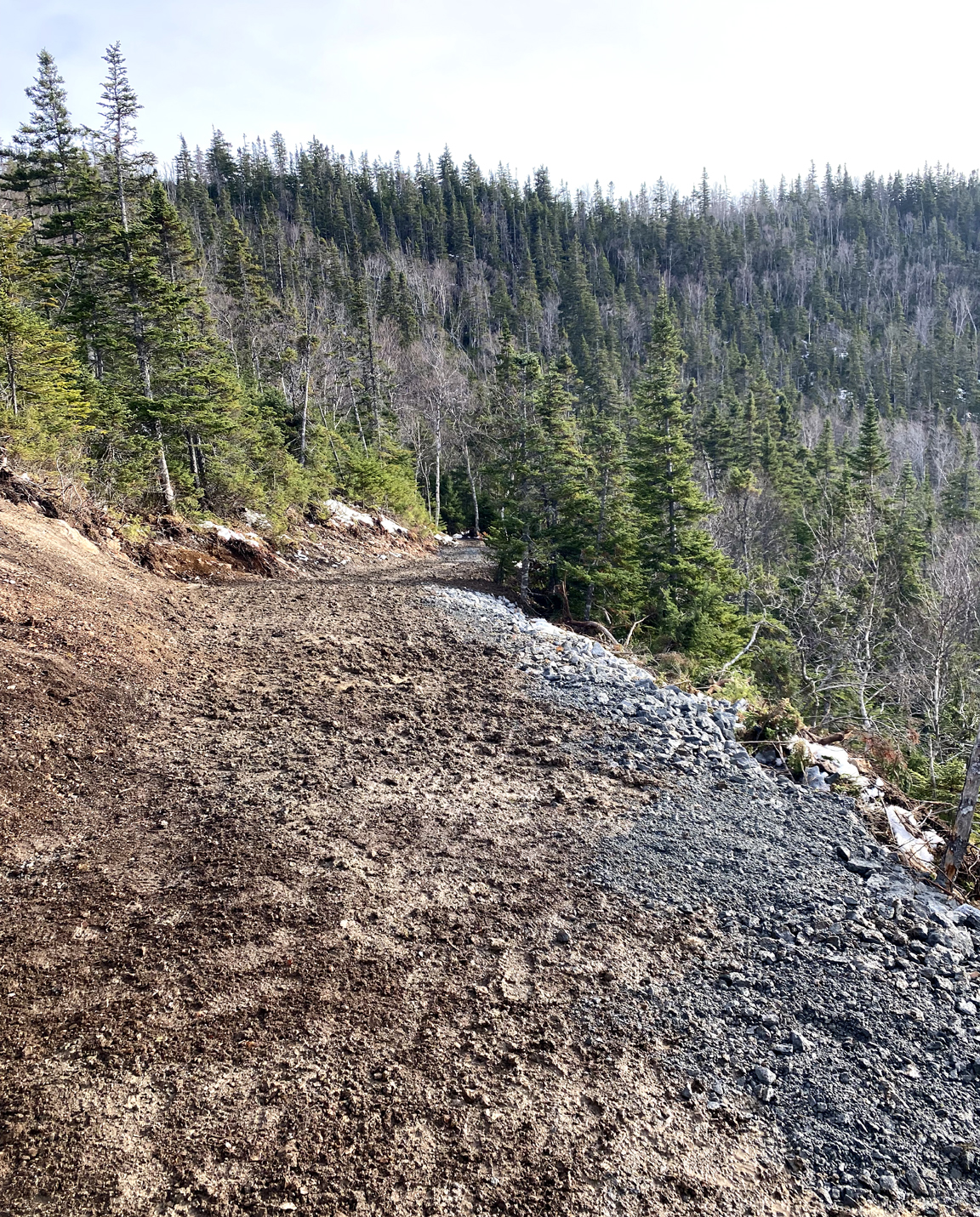
After 6 months of cutting trees, grubbing sod and spreading aggregate, work has been completed on Phase One of the new and improved Humber Valley Trail to Man in the Mountain in the lower Humber Valley, aka Humber Gorge.

The 20-year-old backcountry trail was initially developed as a narrow footpath by the International Appalachian Trail Newfoundland and Labrador (IATNL).  However because of its spectacular vistas and proximity to the City of Corner Brook, the trail received a high number of users and was in need of substantial upgrade to improve safety and accessibility and to fulfil its potential as a major “destination trail”.  This view was reinforced by the STAR (Strategic Tourism for Areas and Regions) Humber-Bay of Islands trail master plan which prioritized redevelopment of the trail along with the Cape Blow-Me-Down Trail in York Harbour, which also saw redevelopment begin in 2025.

The redevelopment of the trail is a partnership between the IATNL and Cabox Geopark, with funding provided by the Atlantic Canada Opportunities Agency (ACOA), Newfoundland and Labrador Department of Industry, Energy and Technology (IET) and the Trans Canada Trail (TCT), which recognized the need for a non-motorized hiking/biking route through the lower Humber Valley which incorporates the values of its Greenway Principles The need is especially evident given there is no longer a Newfoundland Railway corridor (now Newfoundland T’Railway) through the Humber Valley between Corner Brook and Pasadena.

The two-year plan to redevelop the trail includes use of mechanized equipment such as mini excavator and skid steer, and can be divided into four components:

  1. Improve routing to avoid excessively steep and wet sections of trail
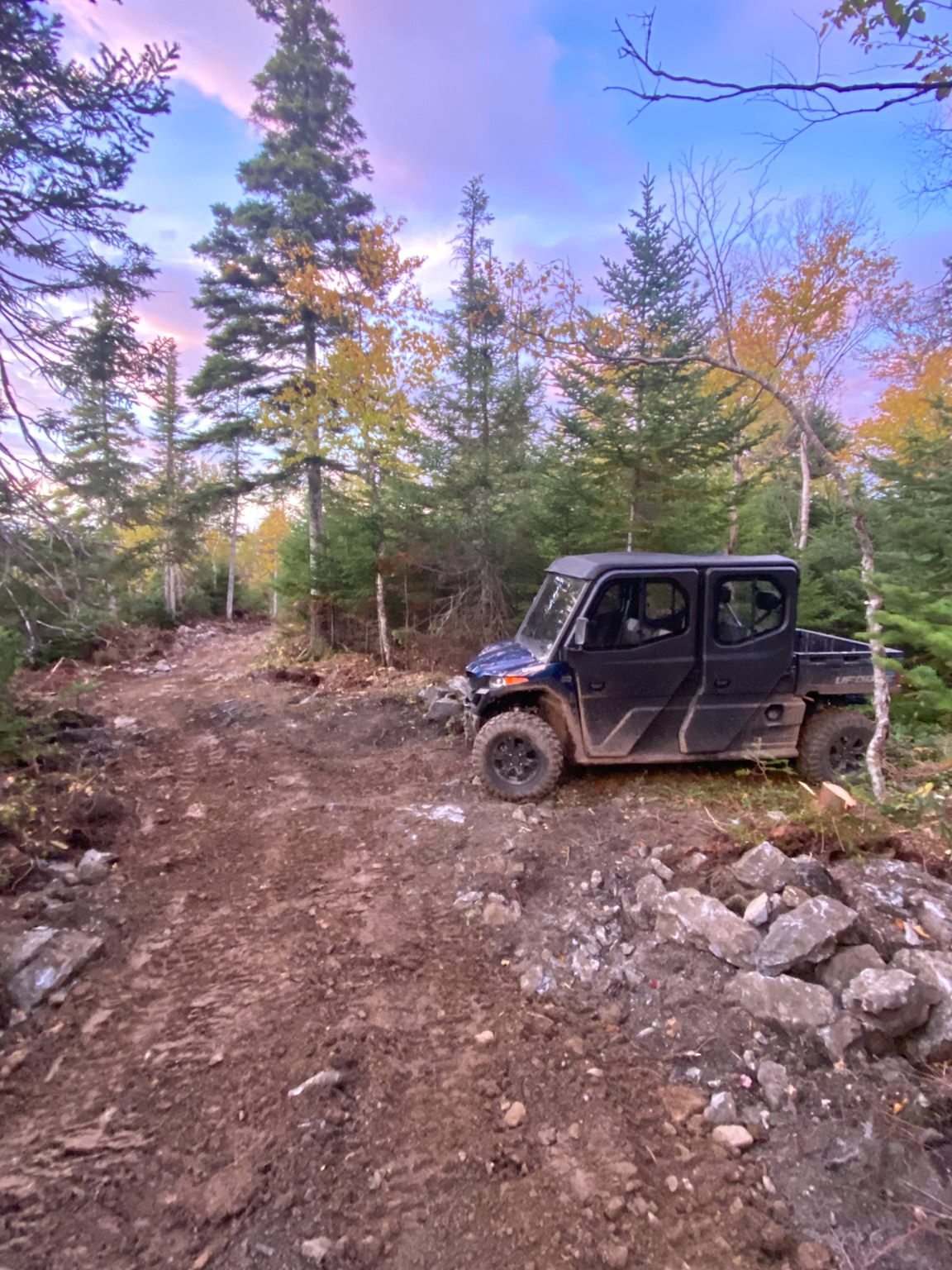
  2. Increase width of trail to improve user experience (e.g. side-by-side walking facilitates conversation) and enable ATV access to increase trail maintenance  
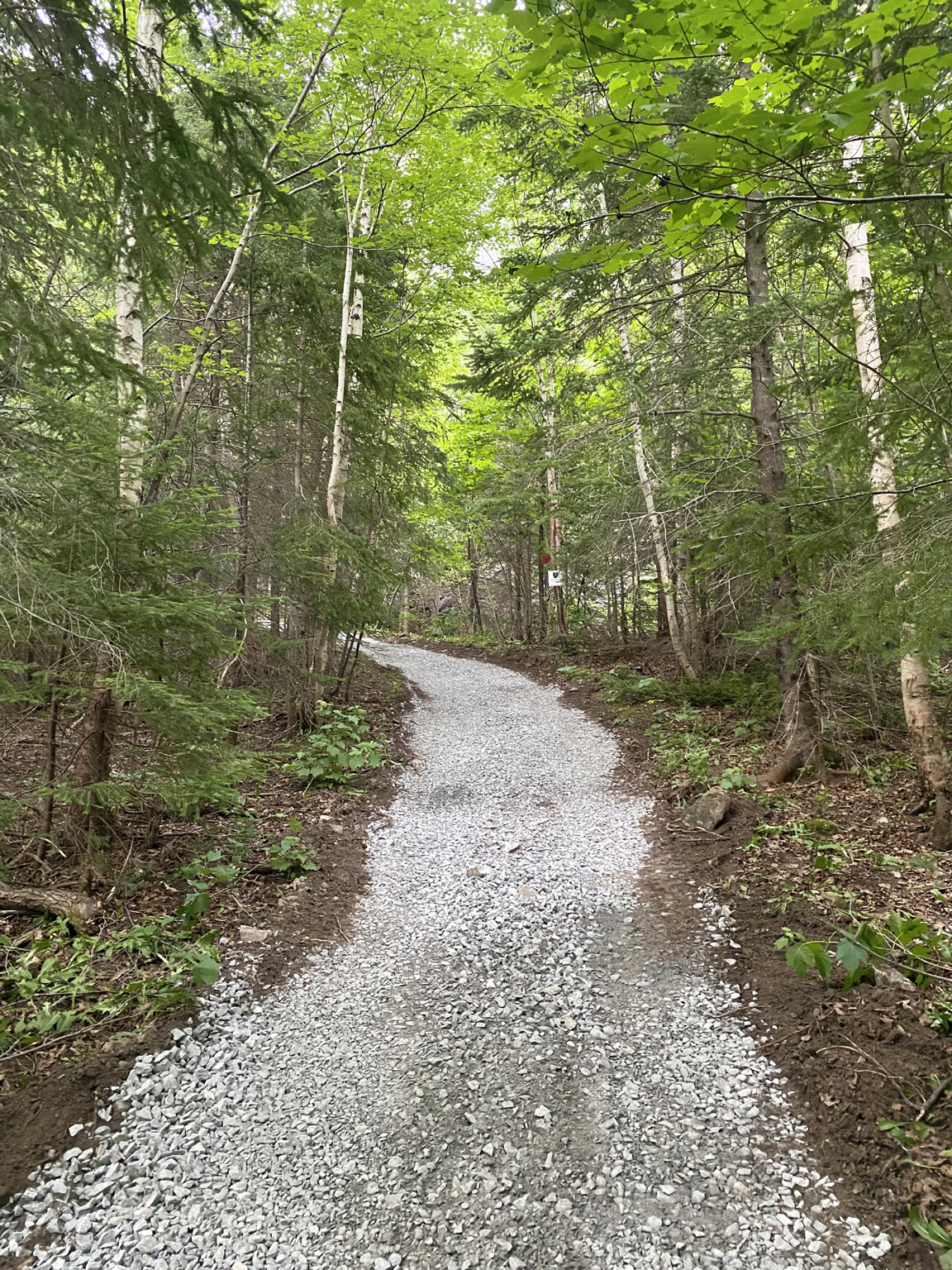
  3. Upgrade trail surface to improve comfort, safety and durability
  4. Develop points of interest (e.g., viewpoints) and install user amenities (e.g., benches)

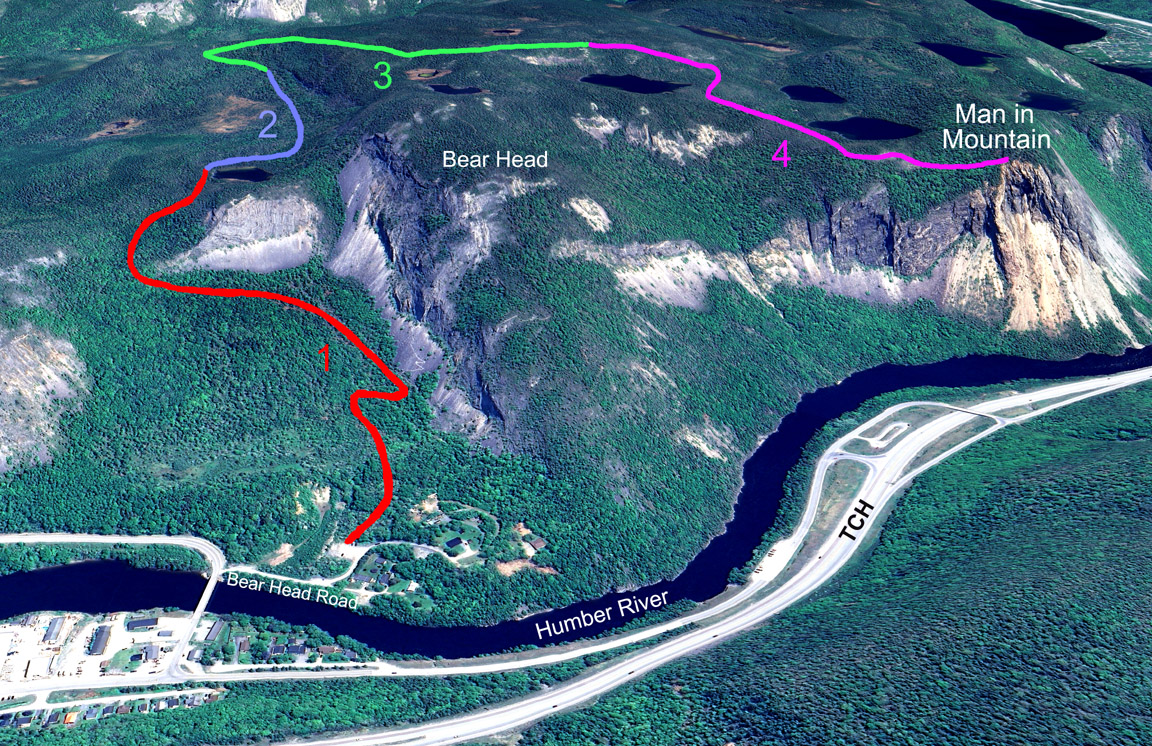
while the new 5.5 km route – which rises to a height of 340 meters – can be divided into four trail sections:

  1. Western Foothill (1.3 km)
  2. Lower Plateau (1 km)
  3. Upper Plateau (1.7 km)
  4. Lake Approach (1.5 km)

Phase One (2025) of the trail redevelopment plan included completion of Trail Sections 1 and 2 and significant development of Trail Section 3, minus the top coat of Class A aggregate, which is to be applied from the inside out at the end of Phase Two to avoid surface deterioration.  Tasks included:

  1. Removing trees and bushes from the trail corridor
  2. Removing organics from (i.e., grubbing) the trail corridor
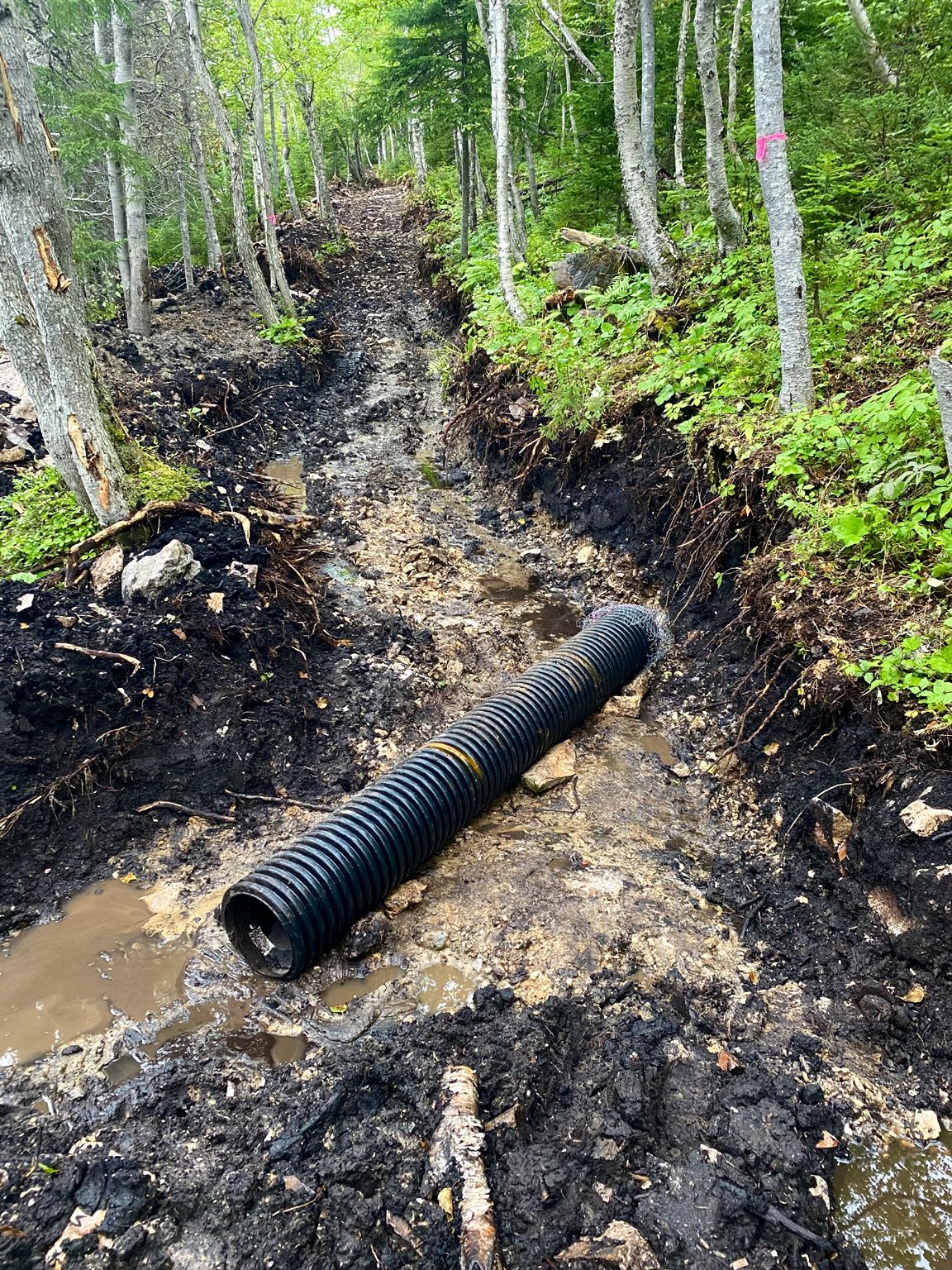
  3. Installing drainage culverts where needed
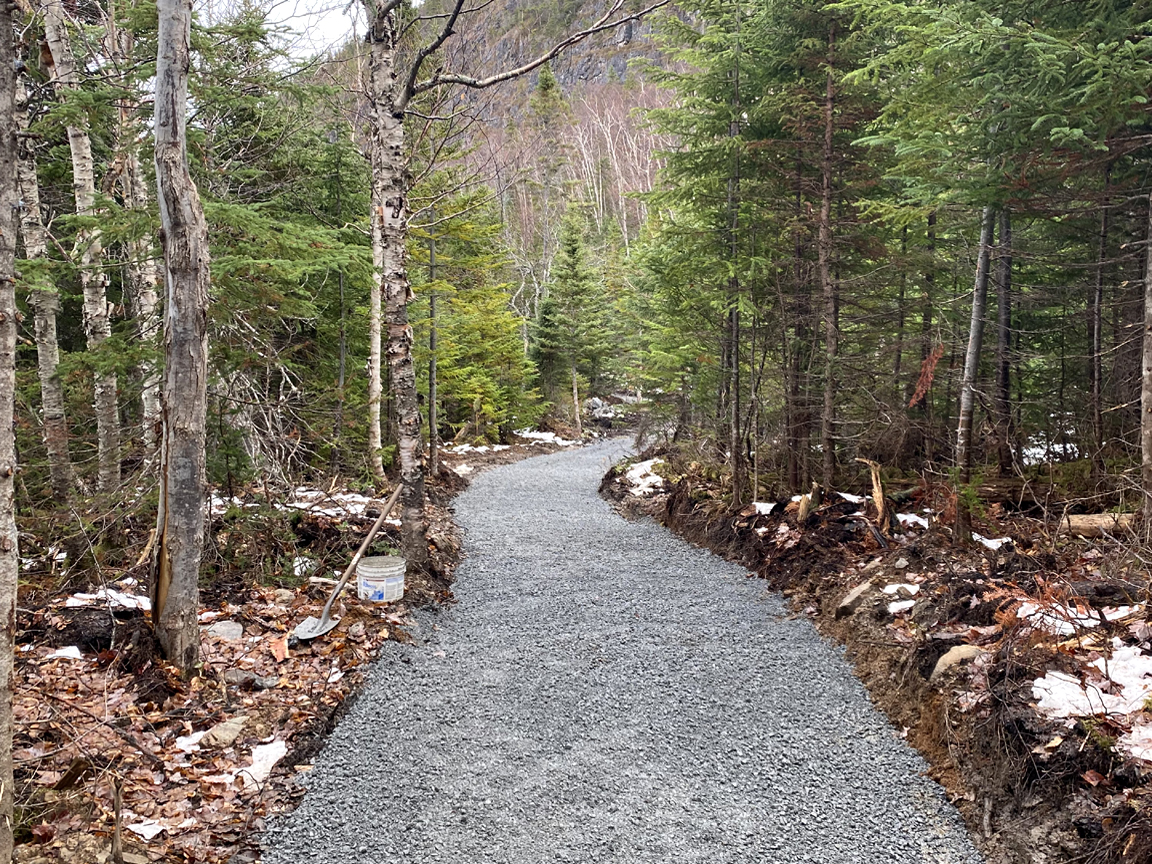
  4. Applying various types of aggregate to the trail corridor

Work began on Section 1 during the last week of April and continued until mid-June, at which time the original section of trail to the first pond above the Western Foothill (now the intersecting point between the new and old trail routes, which will become part of the nearby Bear Head Trail) was widened, grubbed and surfaced with Class B aggregate (1.5 inches and less). New sections were also developed to bypass more challenging sections of the older route.

From the small pond, the redeveloped trail is an entirely new route which slowly ramps upward along the base of 1-kilometer long Bear Head Range.  This gradual ascent makes possible the use of mini excavator and skid steer, which was essential to filling in boggy areas caused by mountain springs and installing culverts. 

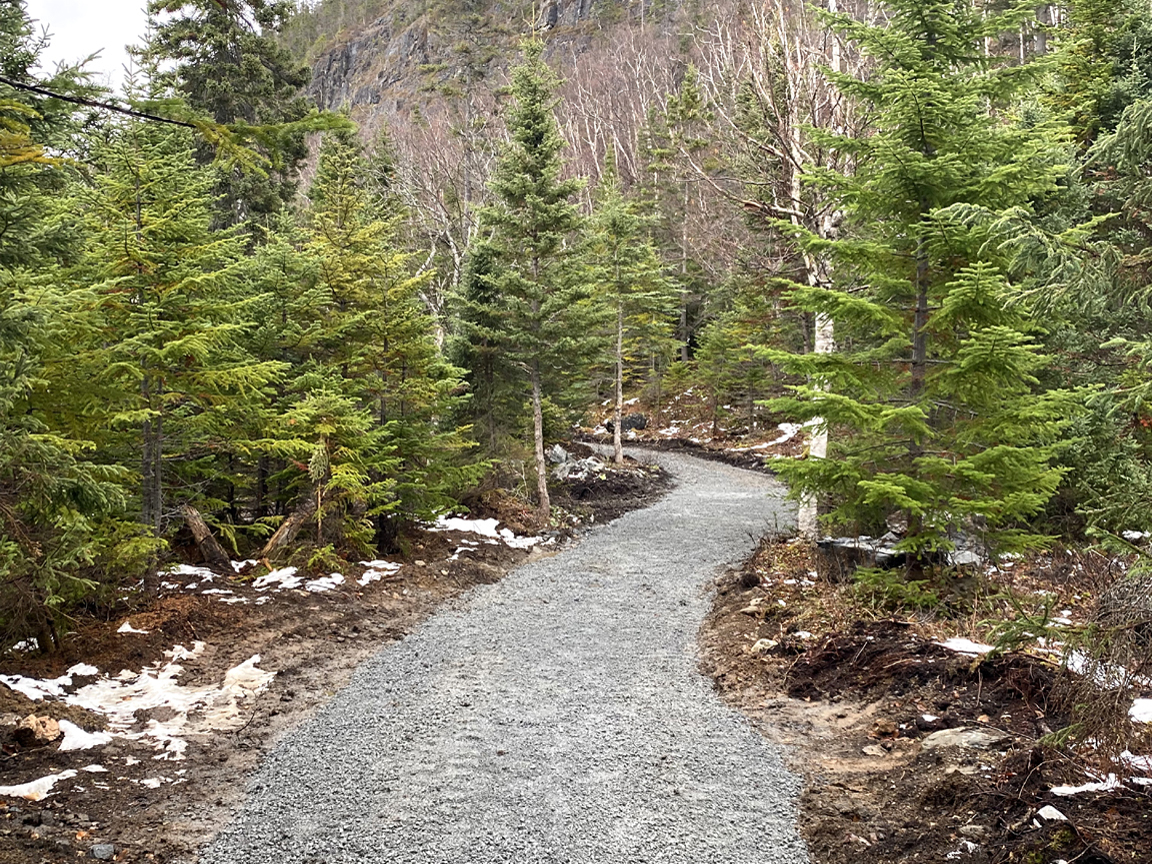
This section across the Lower Plateau was constructed between mid-June and mid-August with the benefit of gravel excavated from two small quarries along the route.  A top coat of Class A was added in November.

Not surprisingly, the most challenging section of Phase One was the critical sidehill ascent which linked the Lower Plateau to the Upper Plateau at the top of Bear Head Range.  Without this connection it would be impossible to access the top of the mountain with the mechanized equipment and develop a premier multi-generation trail with high-quality walking surface.

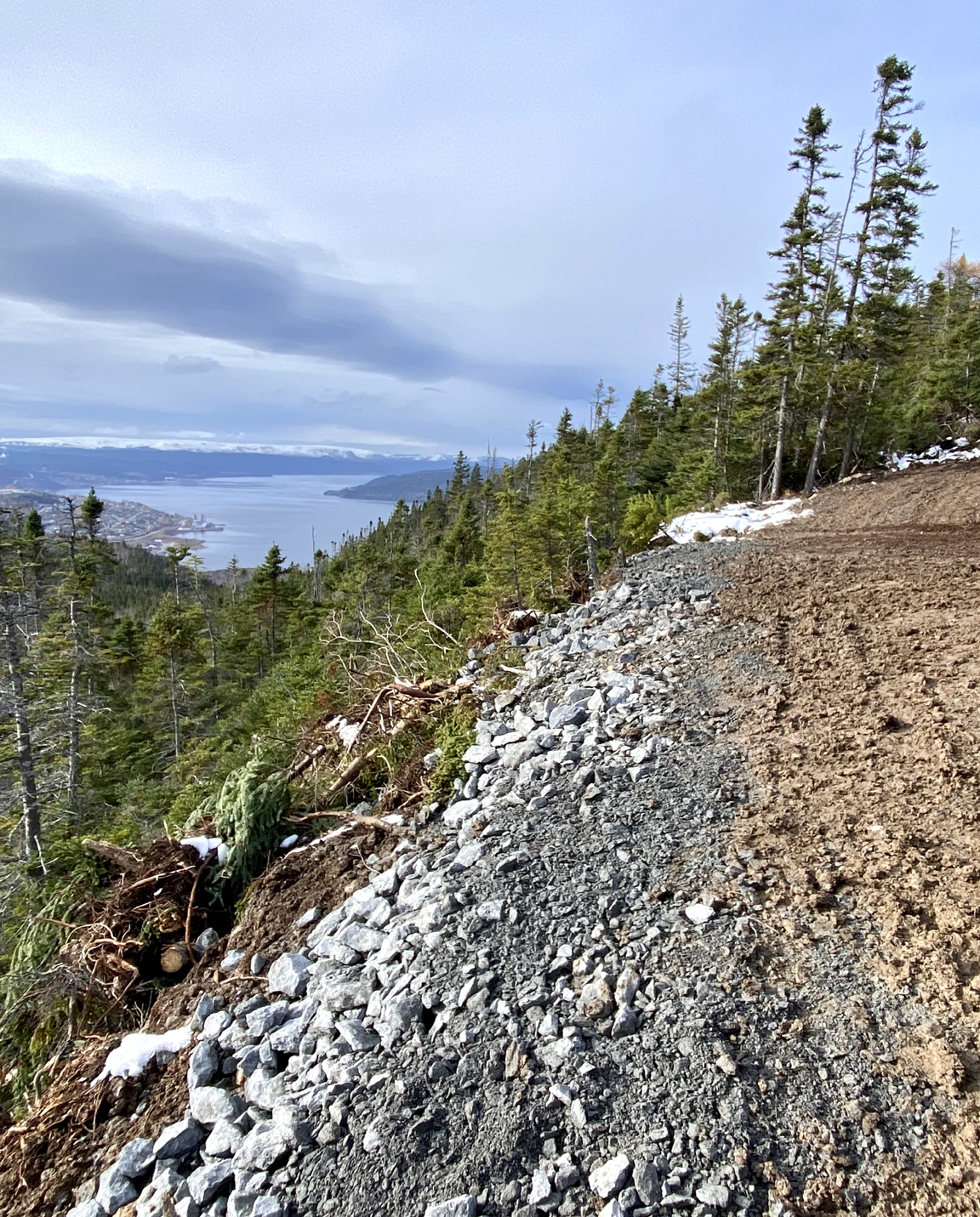
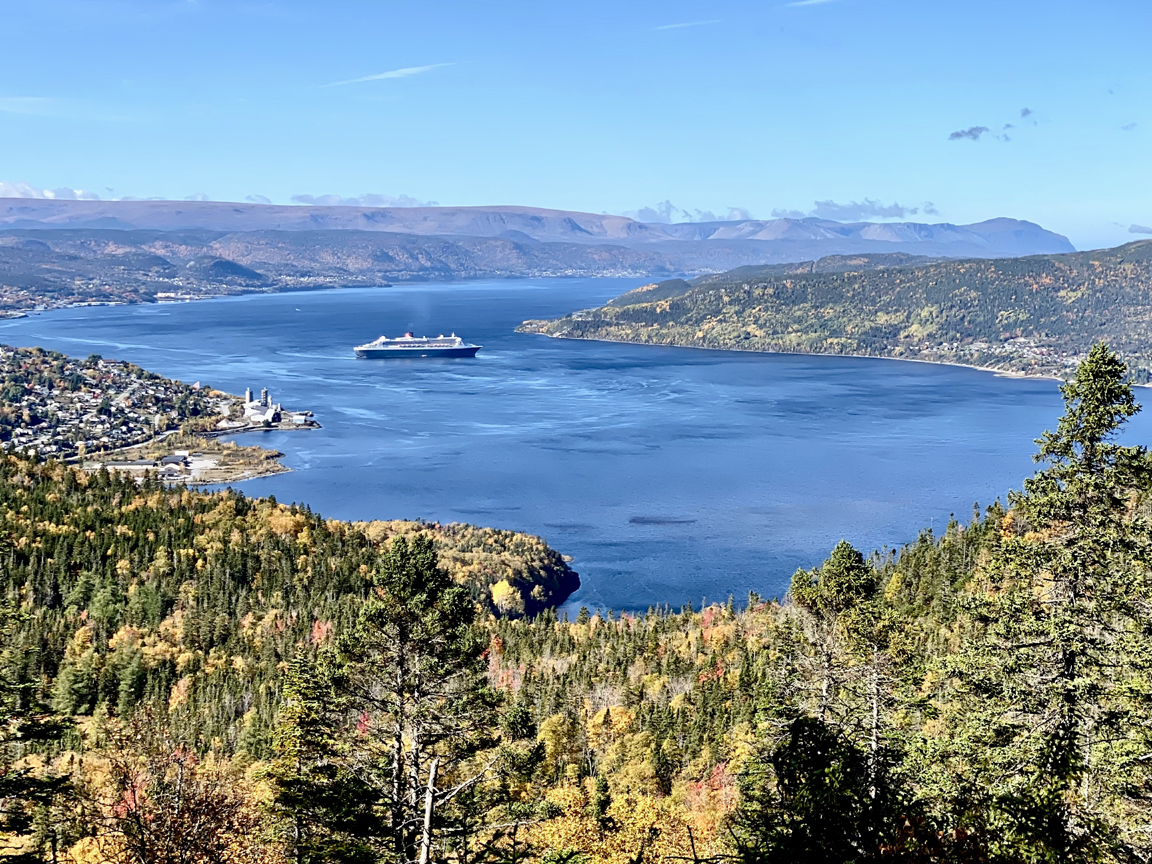
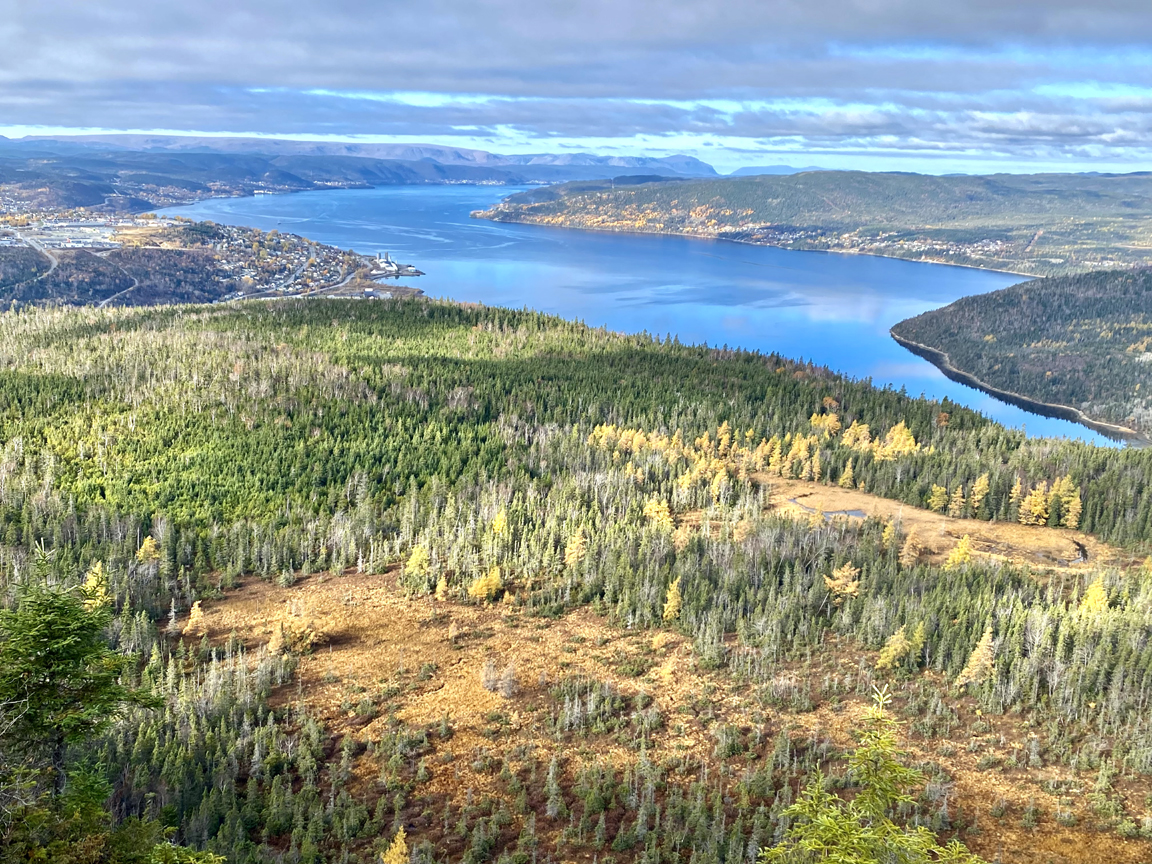
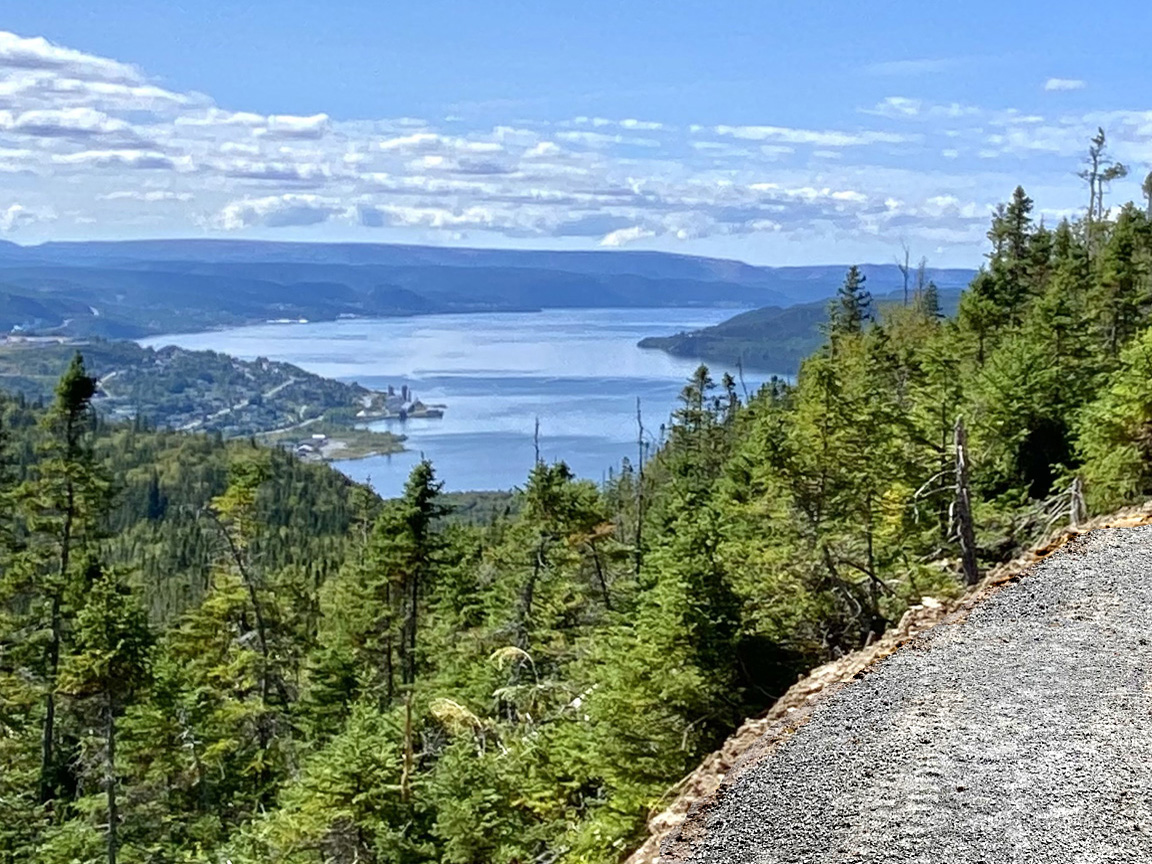
Making it even more challenging was the fact that the sidehill was composed of solid rock as opposed to gravel, talus or scree.  However because the mountain is composed of limestone and not much harder granite, the excavator was able to break up enough rock on the uphill side to use as fill for the downhill side.  Once topped with gravel from a nearby quarry, the diagonal slope was conquered, while providing the first panoramic view of the Humber Arm.

View west from sidehill ascent
View east from sidehill ascent

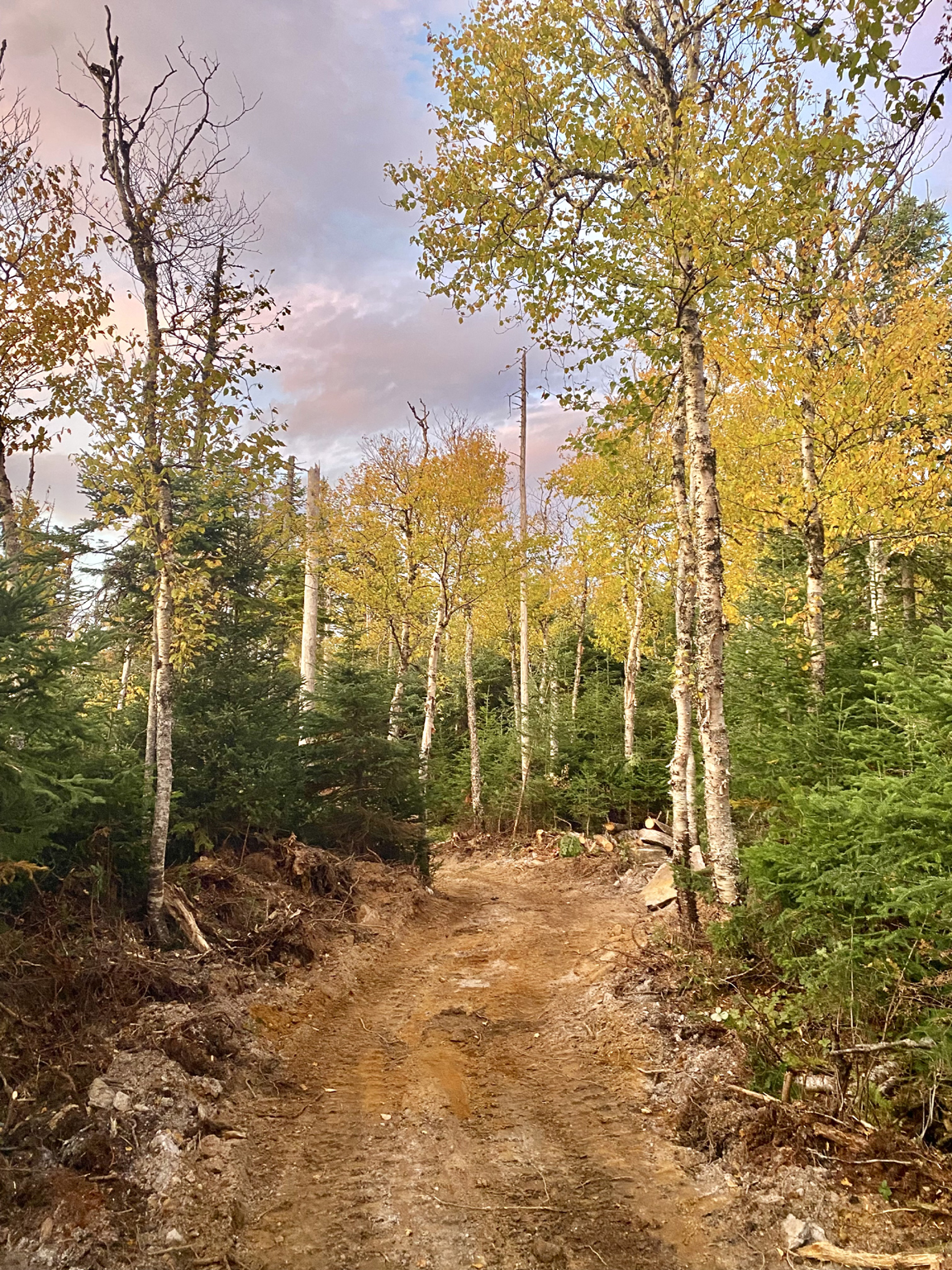
Once above the sidehill, the trail zigged and zagged for 250 meters up the last 30 meters of elevation, avoiding large trees and rock walls on its way to the top.  Along the way it passed the second panoramic vista, which will be developed into a rest area with flagstone benches, interpretive panels and telescope.

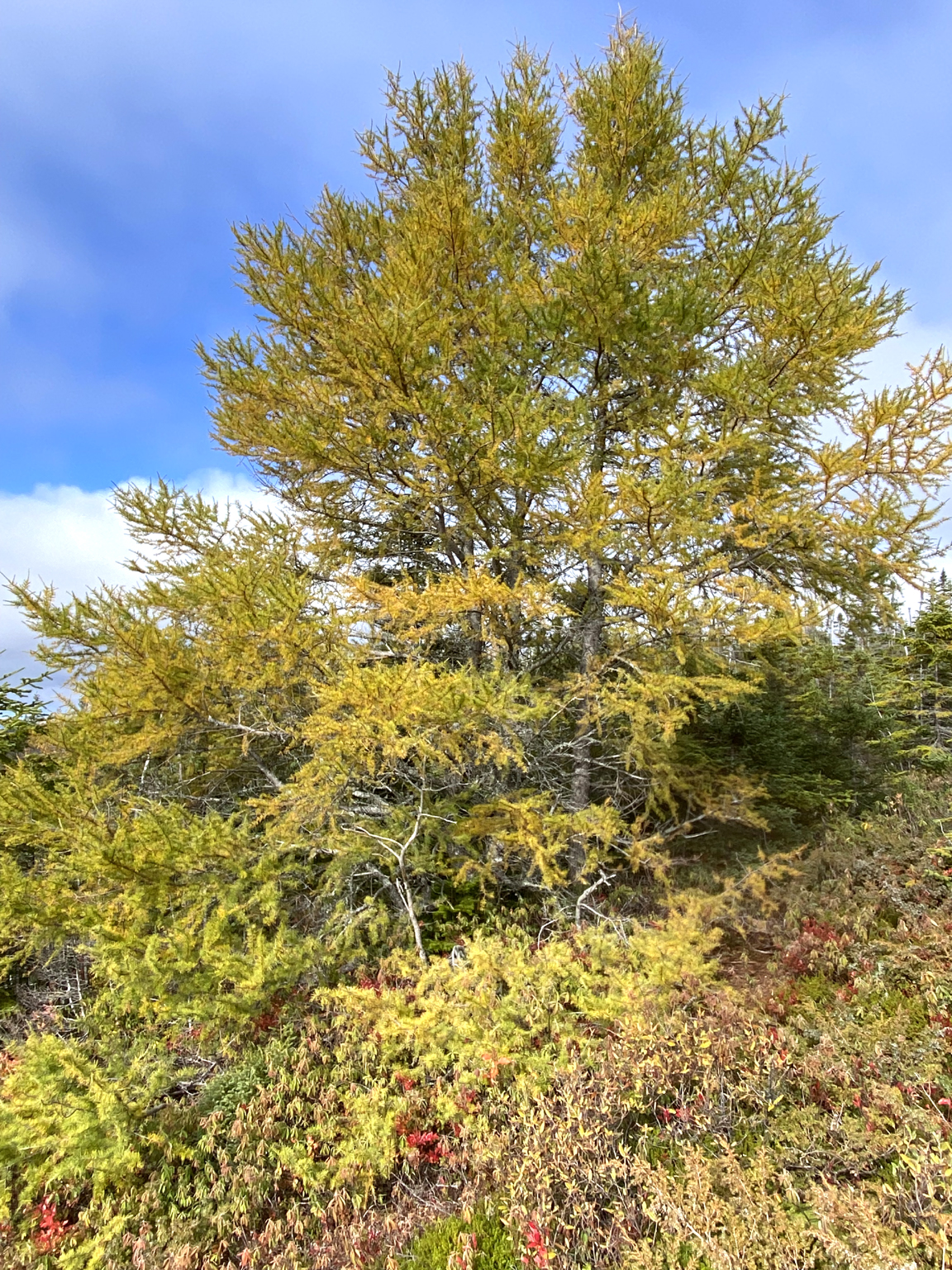
In addition to spectacular viewpoints, an added benefit of the mountaintop route is its ability to stay above wet areas such as springs, streambeds and wetlands.  However the presence of a significant number of large mature trees is a pleasant feature often missing from mountain trails in Western Newfoundland.

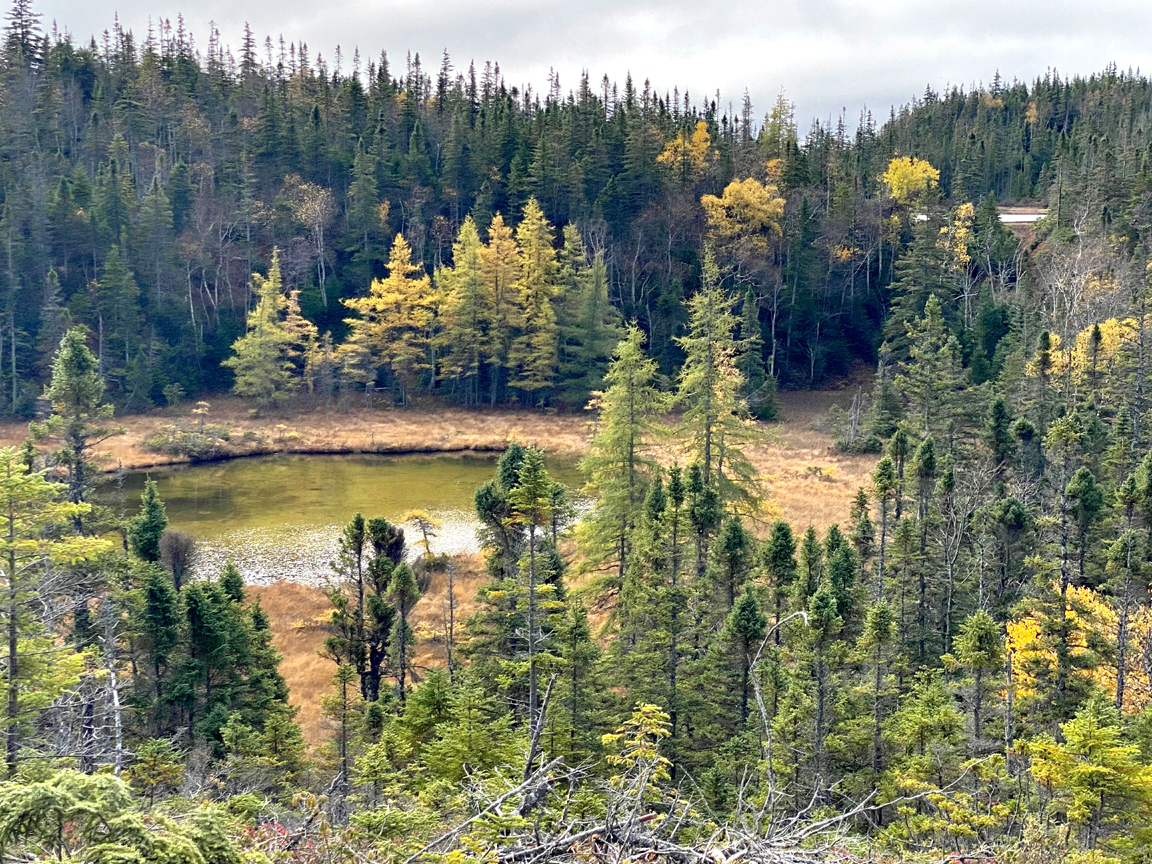
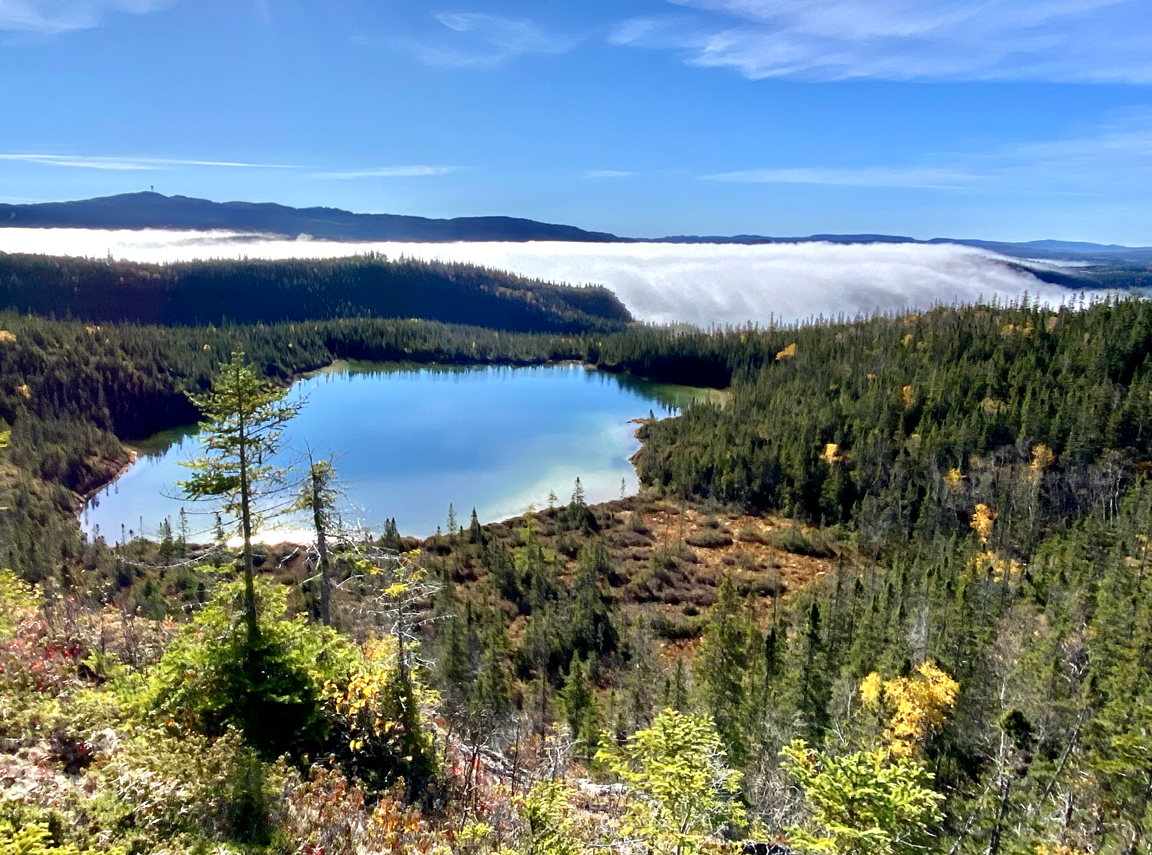
The route across the Upper Plateau connects various points of interest, from showcase vistas

and glacial erratics to remote ponds and lakes.

Finally, work on Section 3, Upper Plateau, included removing all trees and bushes from the trail corridor, grubbing three quarters of organics from the trailbed, and applying one quarter of the gravel or aggregate to the walking surface.