Intro
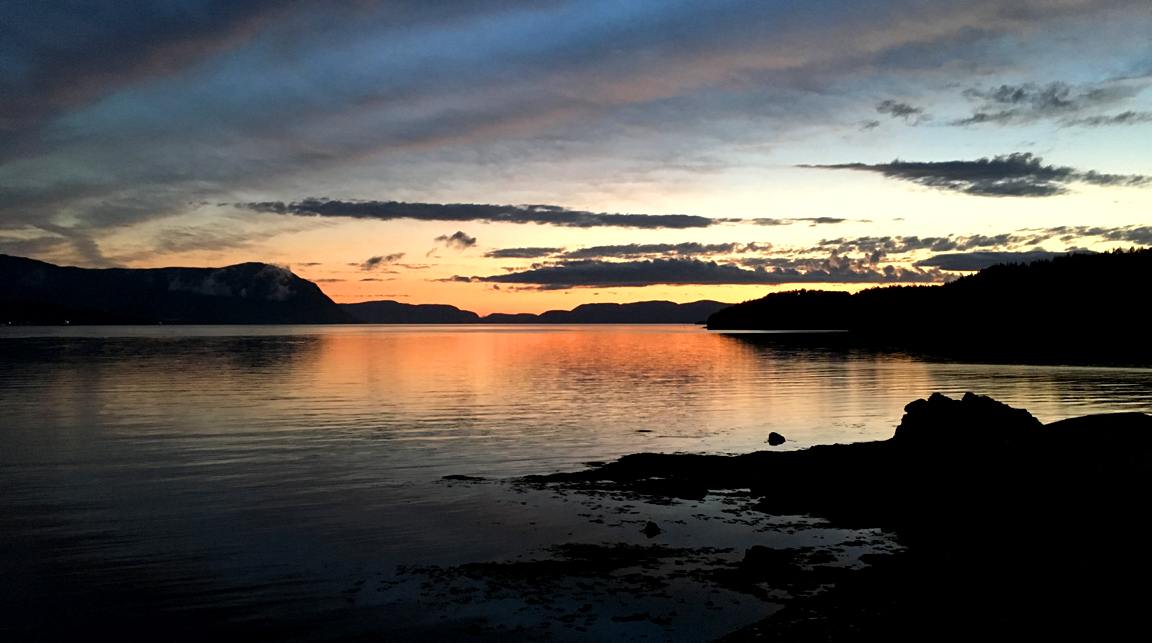
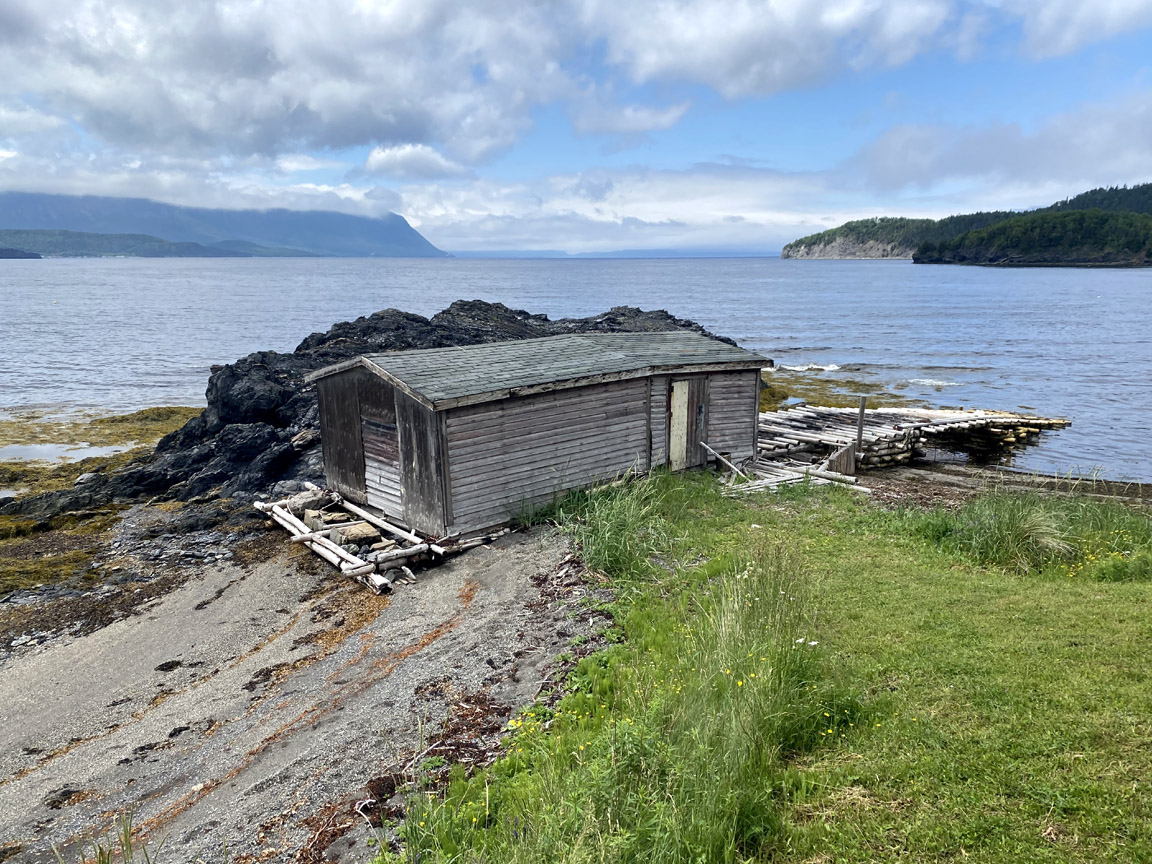
McIver’s is the last community on Route 440 in Humber Arm before it crosses the height of land to Cox’s Cove in Middle Arm. With good access to the outer Bay of Islands, several of its residents are inshore fishermen while most others work in the Corner Brook area. Because of its location, the town is known for beautiful sunsets and terrific views of the Blow Me Down Mountains.
Geological Features
McIvers Beach (49.07184N / -58.12694W)
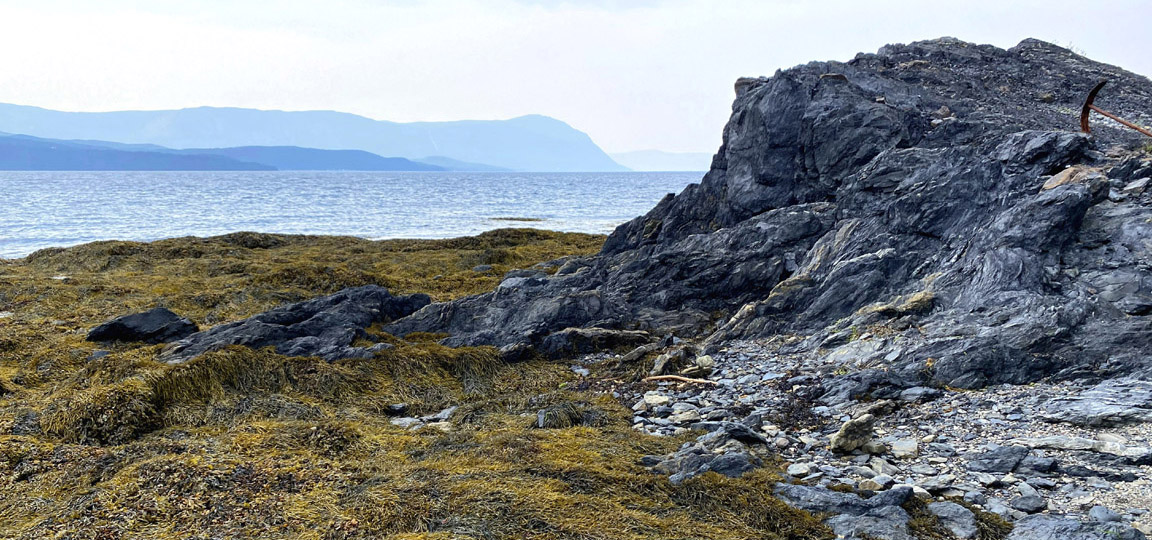
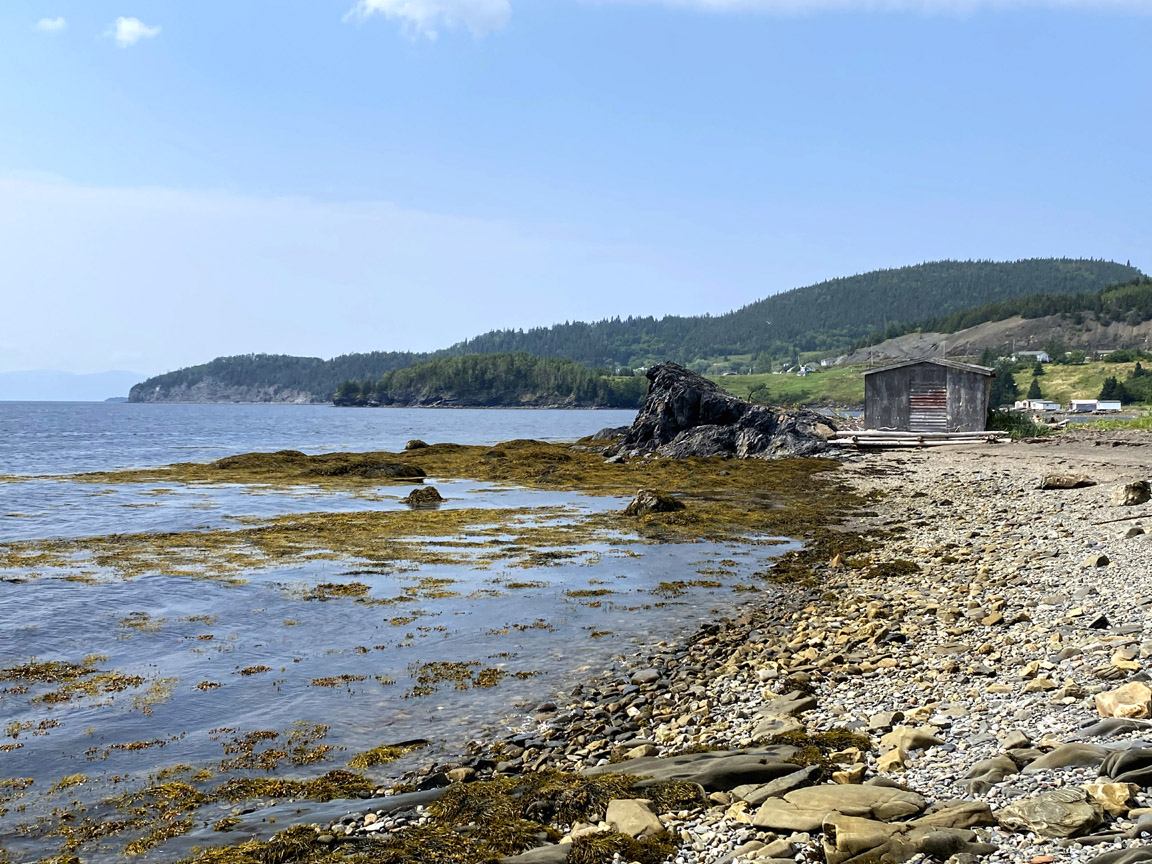
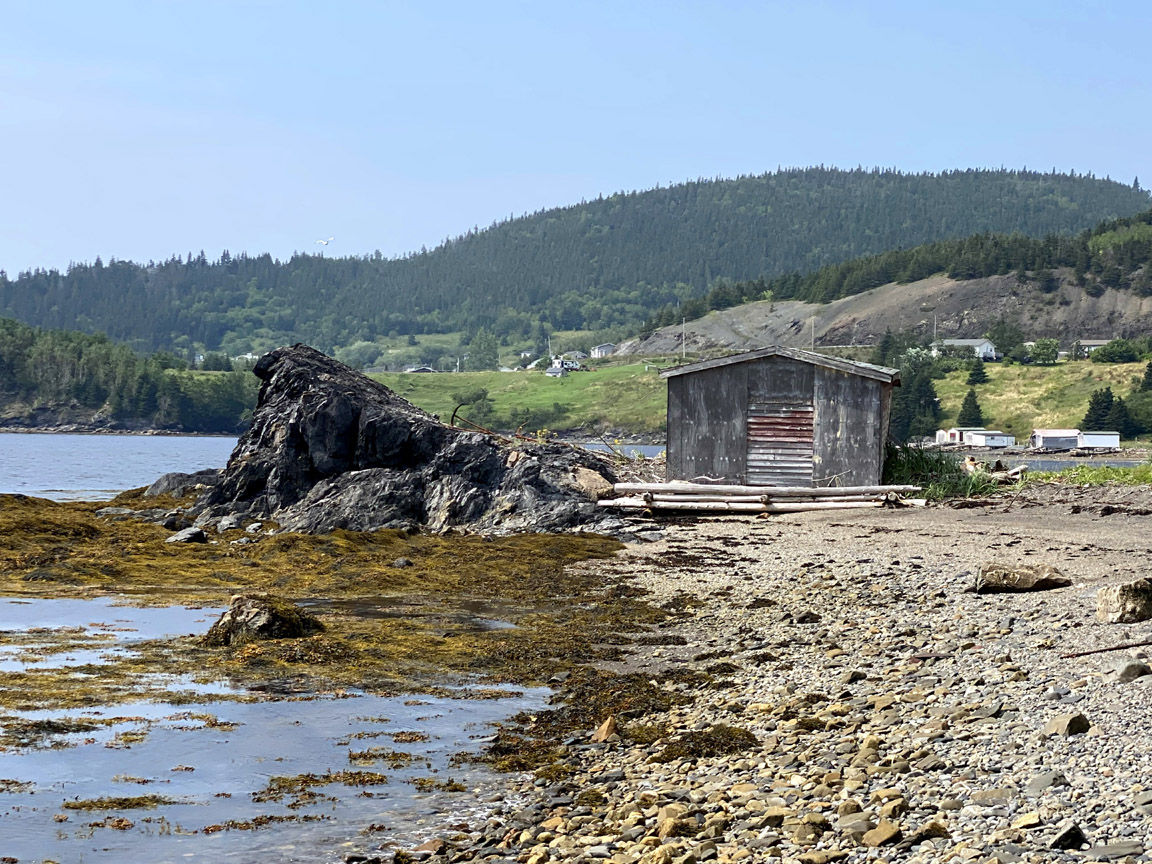
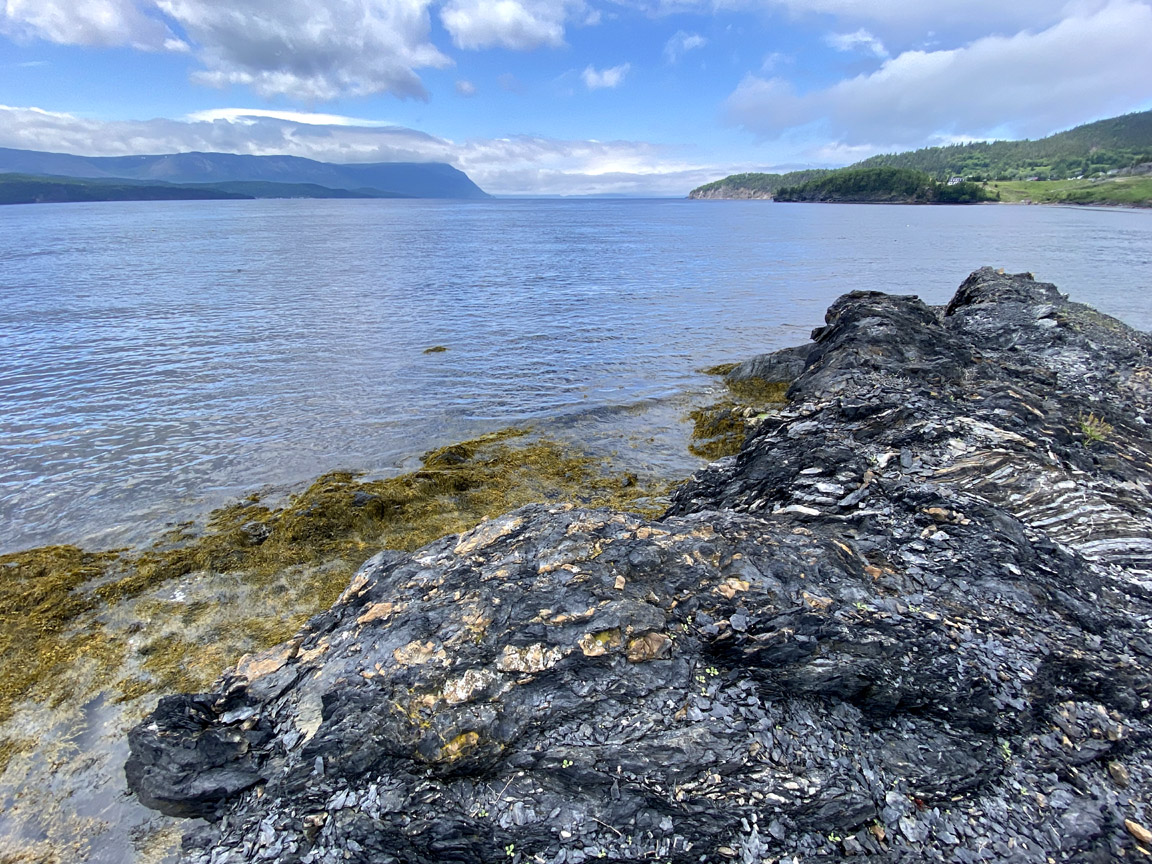
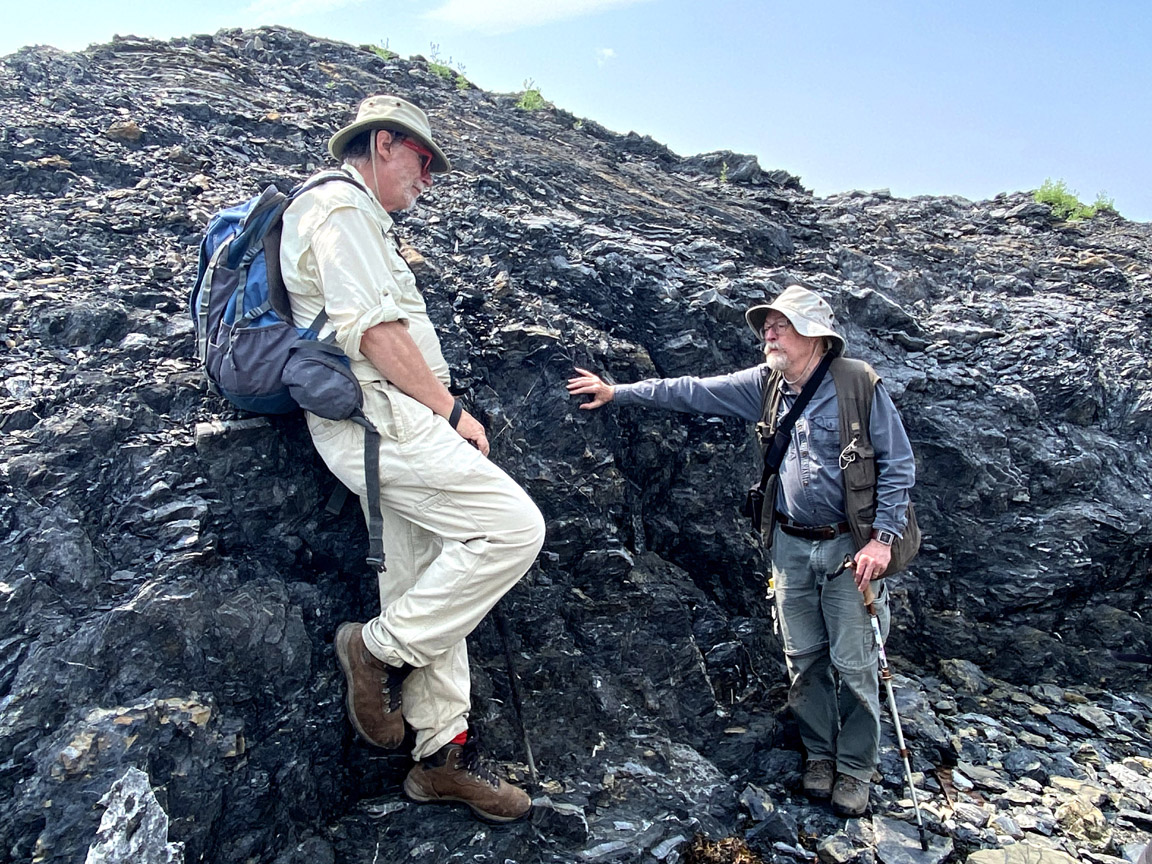
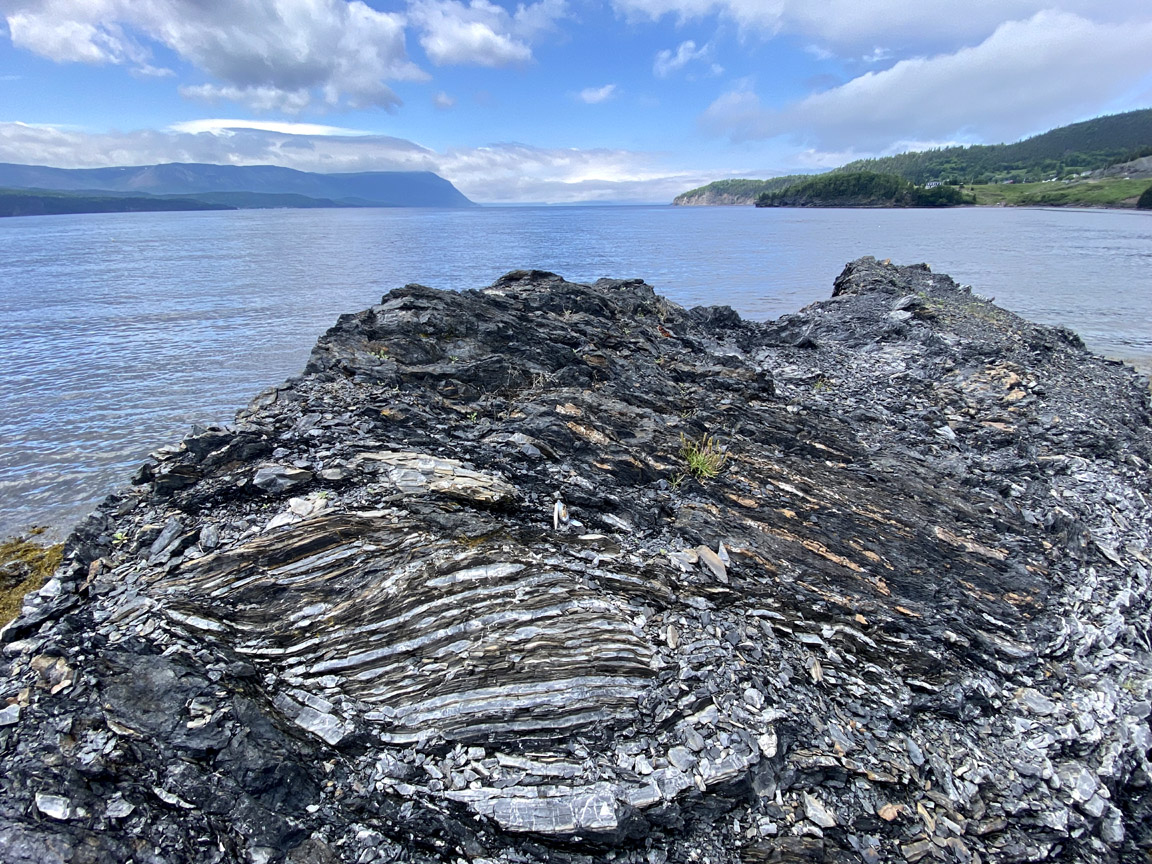
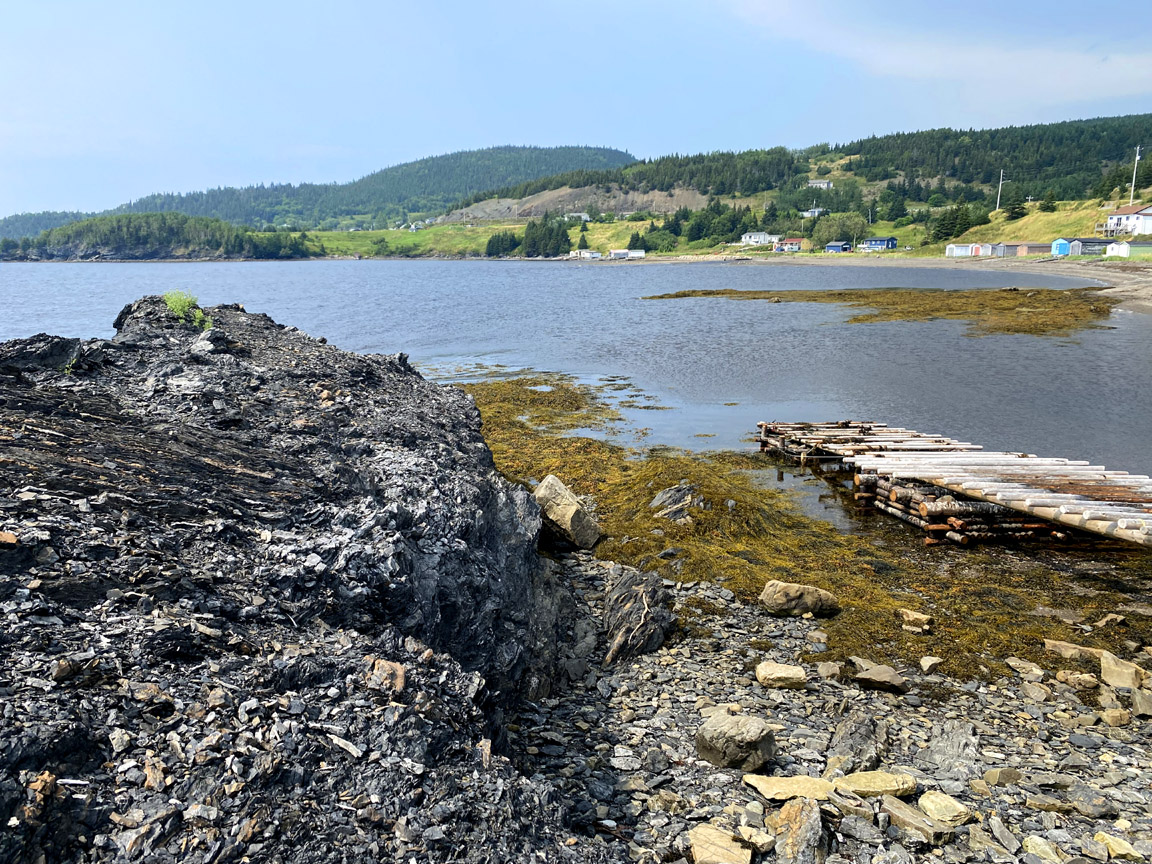
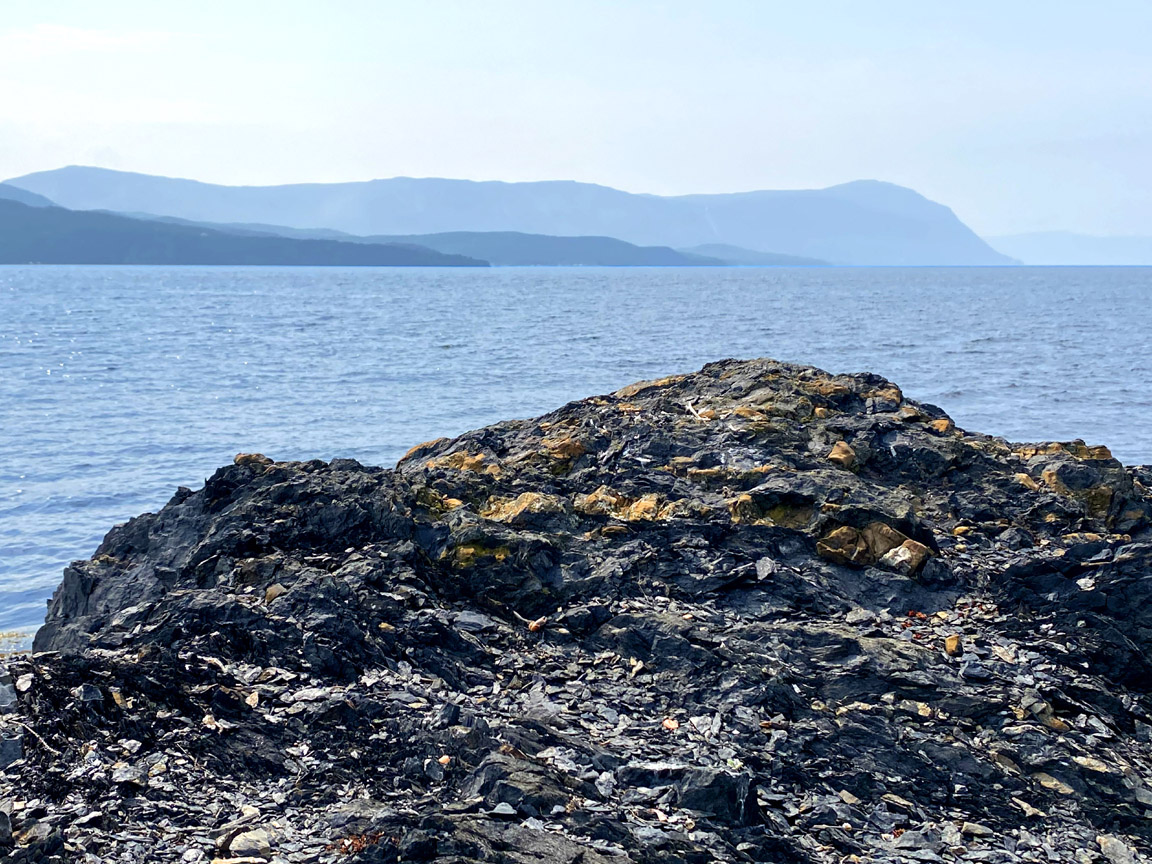
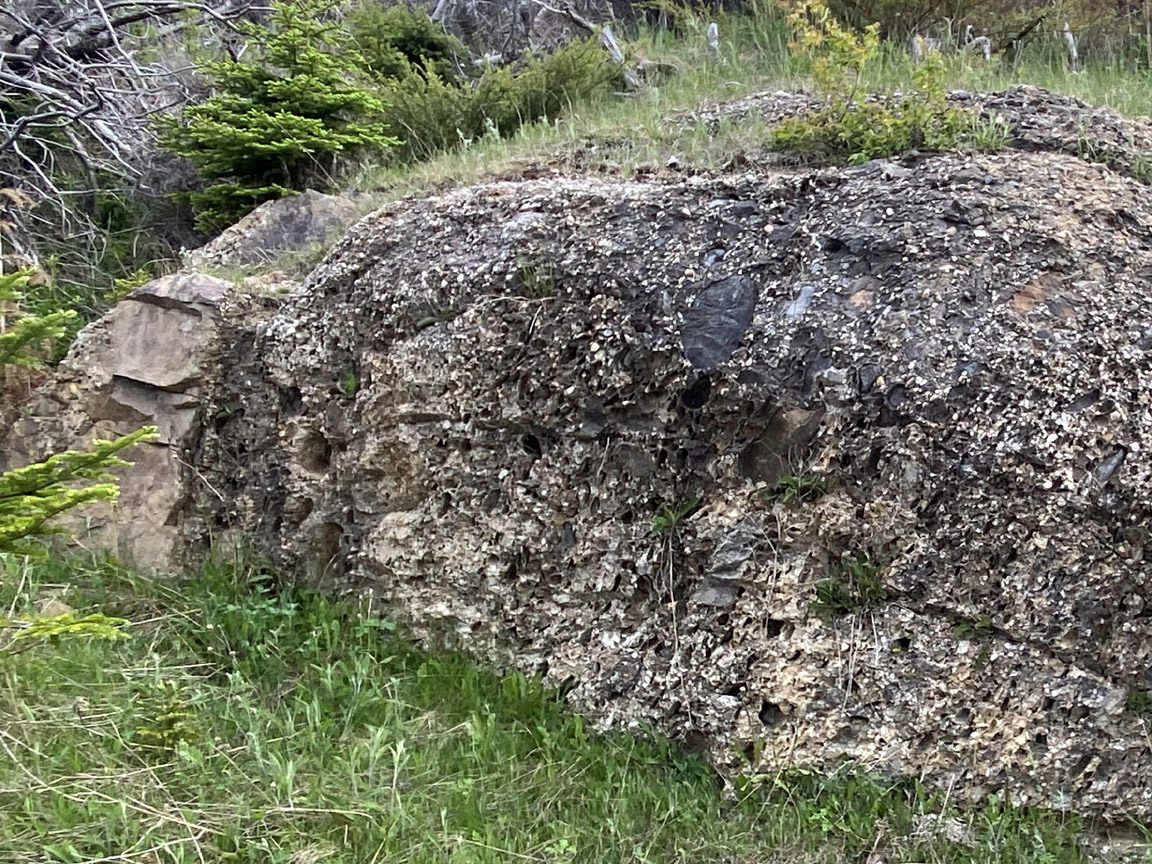
Turn off Route 440 onto Wharf Road and drive 1/4 km to the end of the road. The rocks on the foreshore here were originally dark slate and sandstone of the Irishtown Formation, formed in deep water on the continental slope of ancient North America, but about 465 million years ago they were caught up in the collision of plates and churned up so that the layers can no longer be followed through the rock outcrop. This type of material is termed broken formation by geologists to distinguish it from mélange, which has a similar appearance but is even more churned up so that different rock formations are mixed together.
True mélange can be seen at Frenchman’s Cove on the opposite side of the bay.
Access
To access McIvers Beach below Wharf Road, drive to the end of the road and park near ball field. Skirt the private property of the nearby homeowner while descending to the beach. Be courteous and respectful boundaries.
Ricketts Road (49.07020N / -58.12054W)
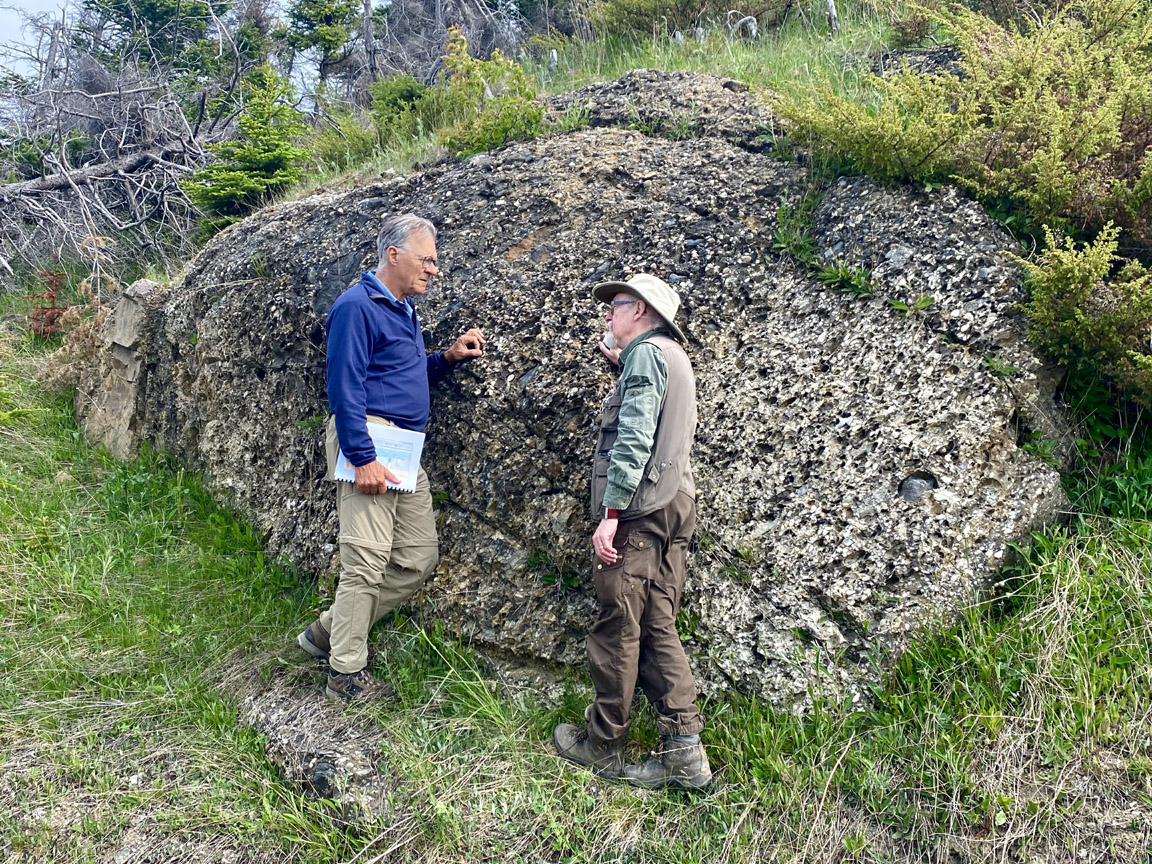
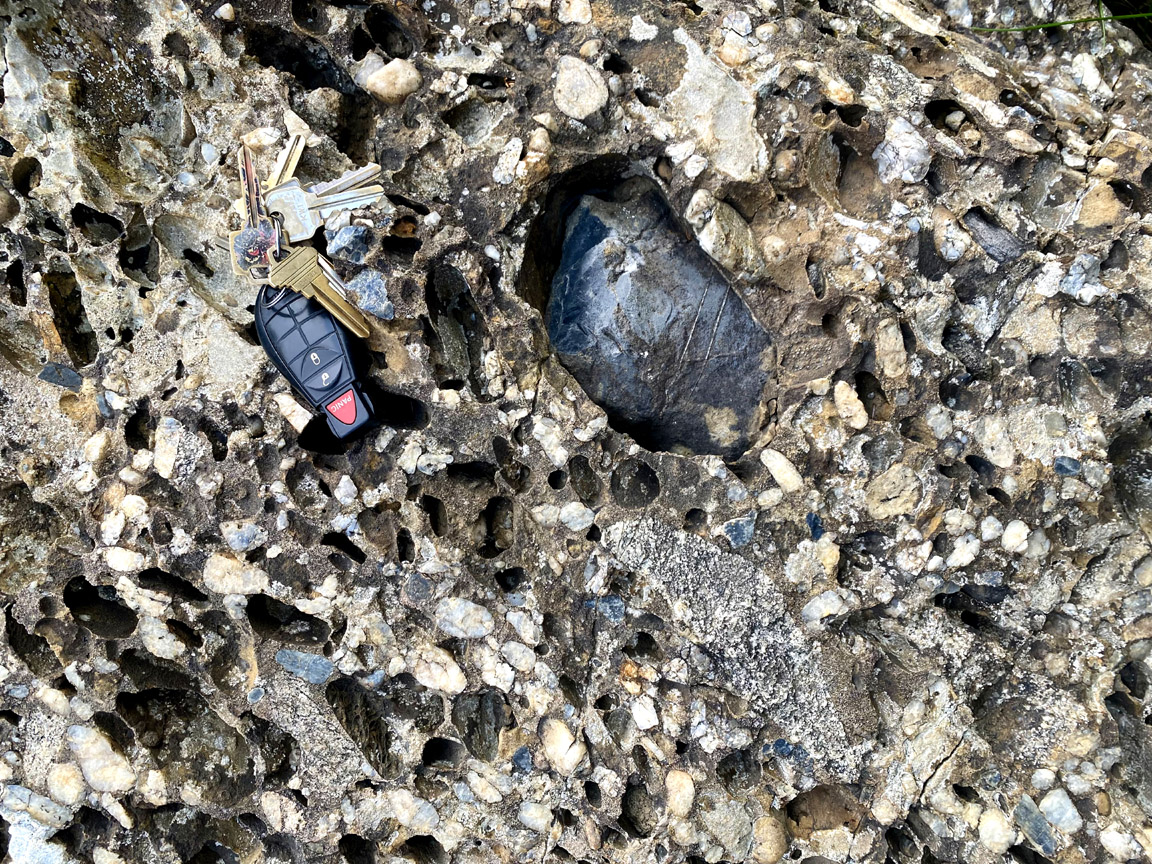
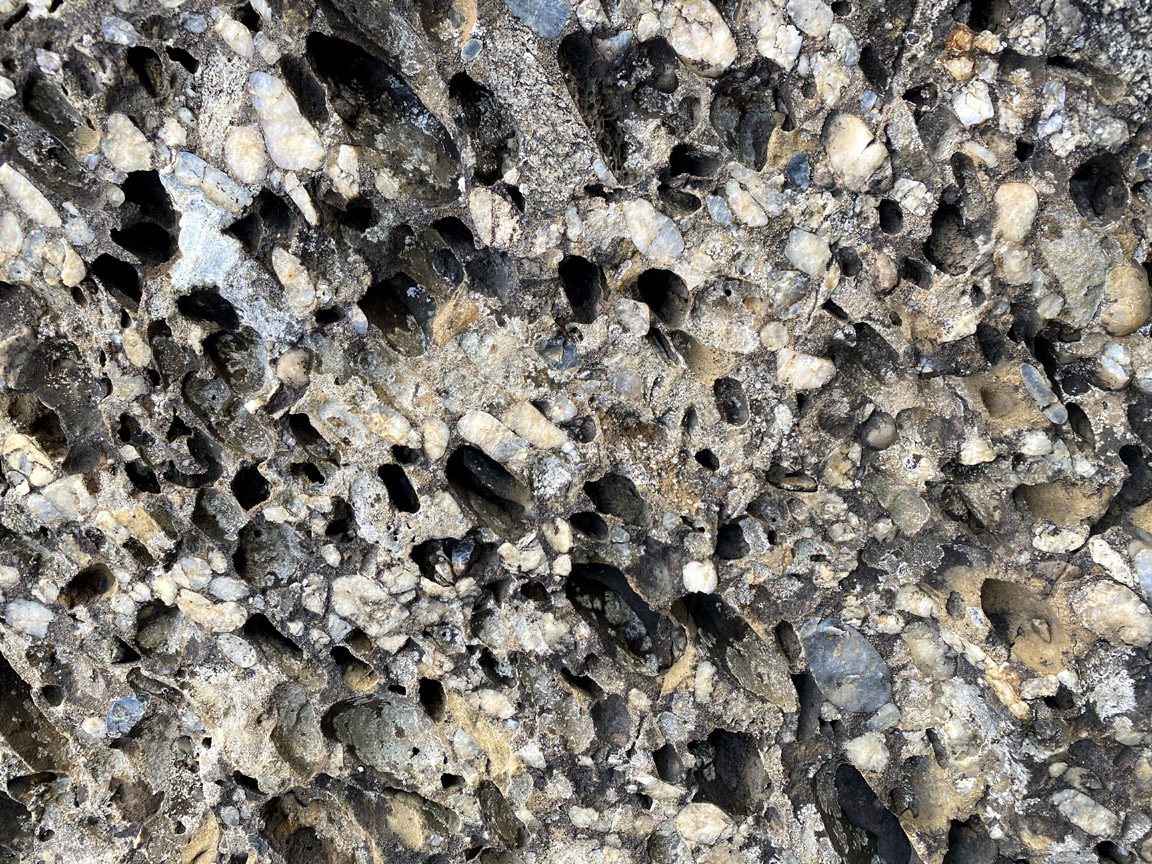
Turn east off Route 440 onto Ricketts Road. In the outcrop on the north side of the road is a coarse conglomerate with rounded pebbles and cobbles, part of the Irishtown Formation. The conglomerate includes pebbles of limestone, some of which contain tiny conical fossils, probably a shelled creature called Salterella that lived in the Cambrian Period between about 520 and 510 million years ago. Salterella is found in rocks of the same age in the shelf succession, the most likely source of the limestone pebbles.
Access
The conglomerate outcrop on the north side of Ricketts Road is near the intersection with Route 440 and is easily accessible without crossing private property.
Other Attractions
McIvers (aka Tern) Island (49.06962N / 58.12683W)
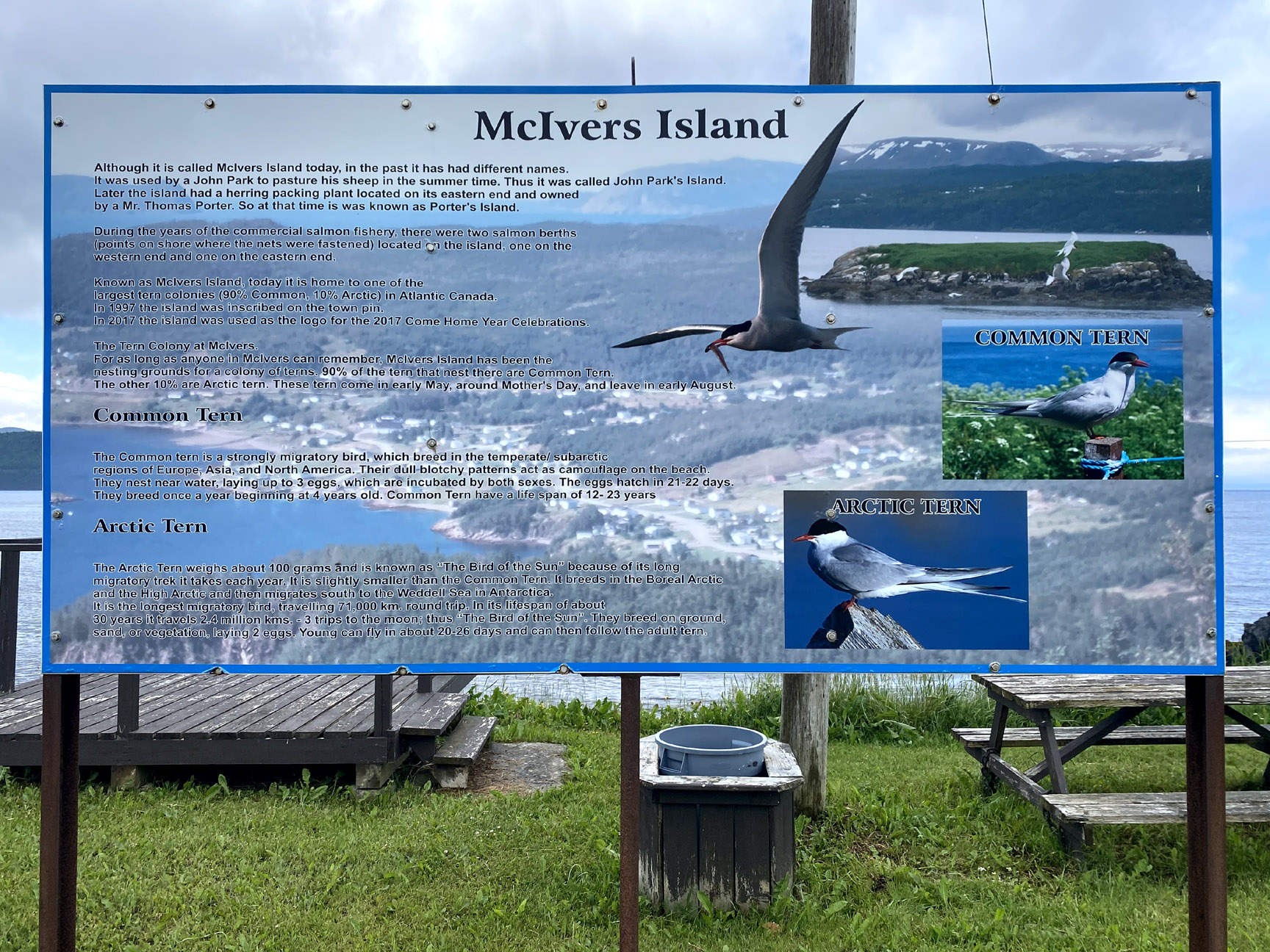
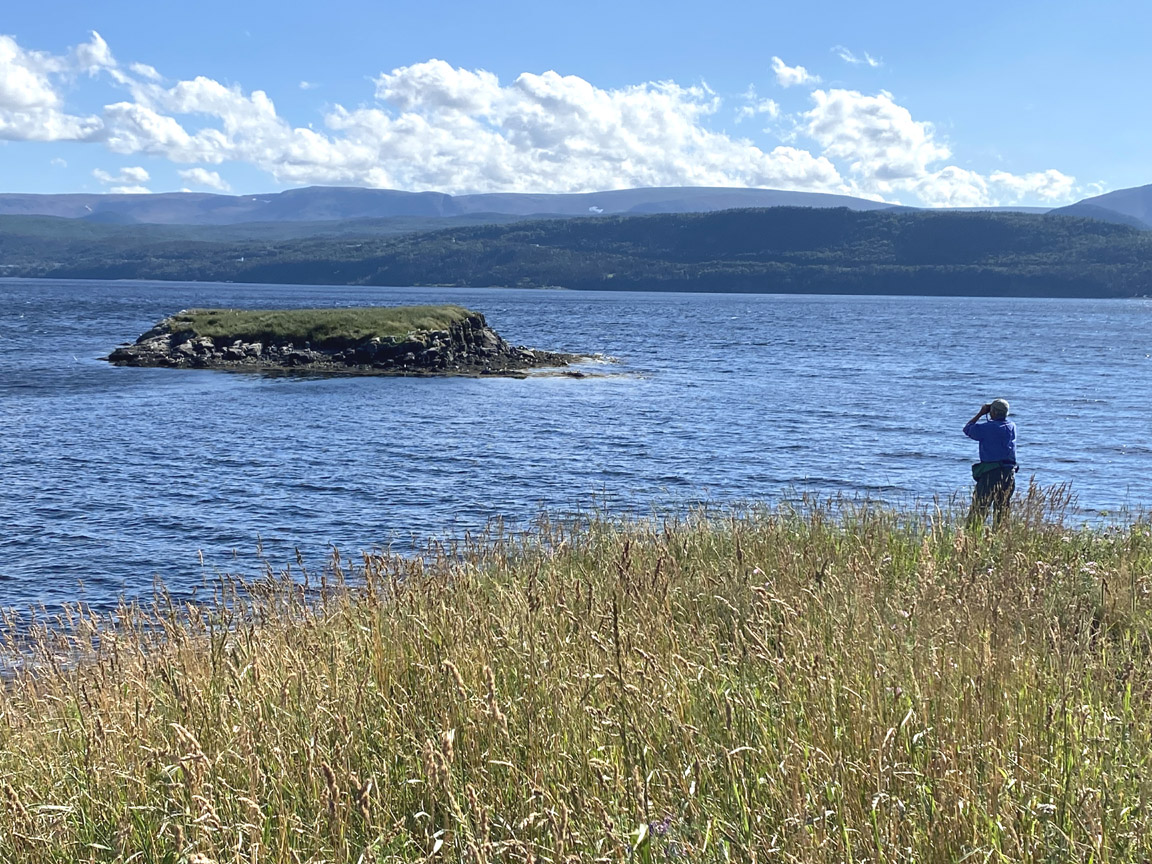
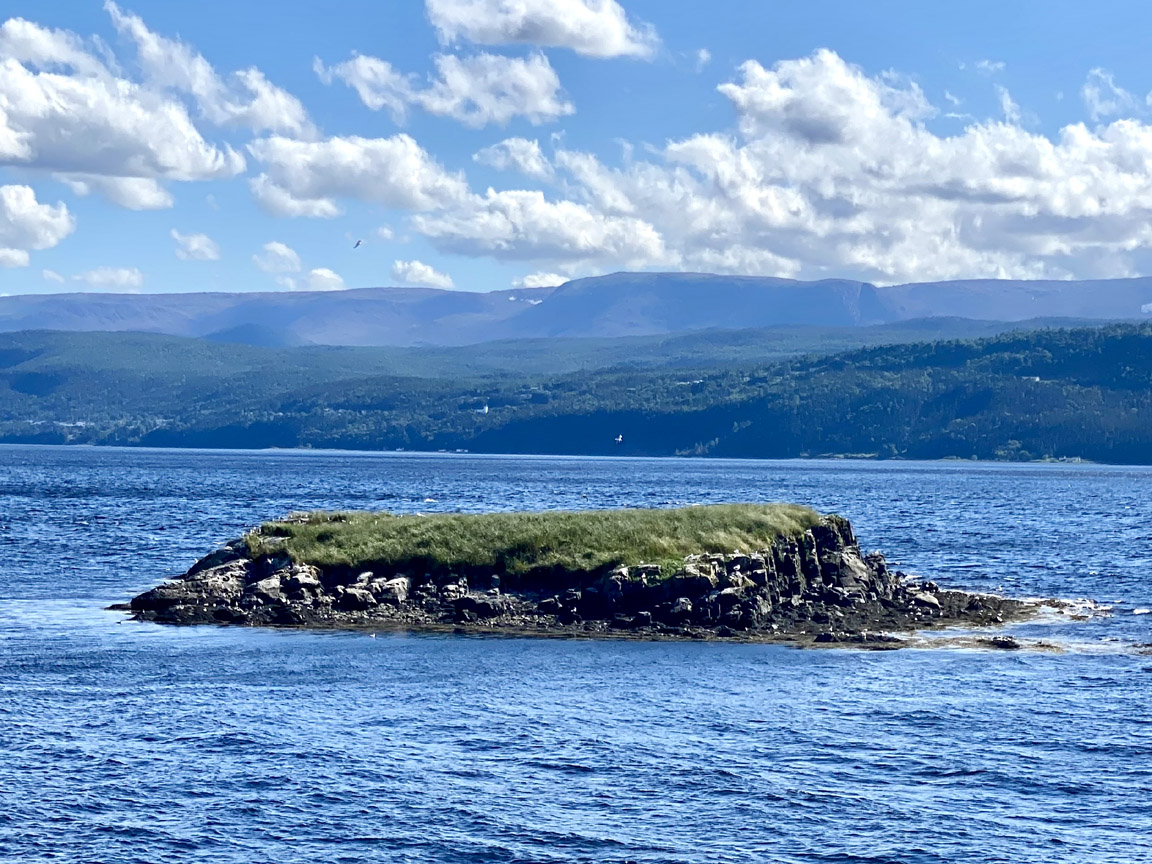
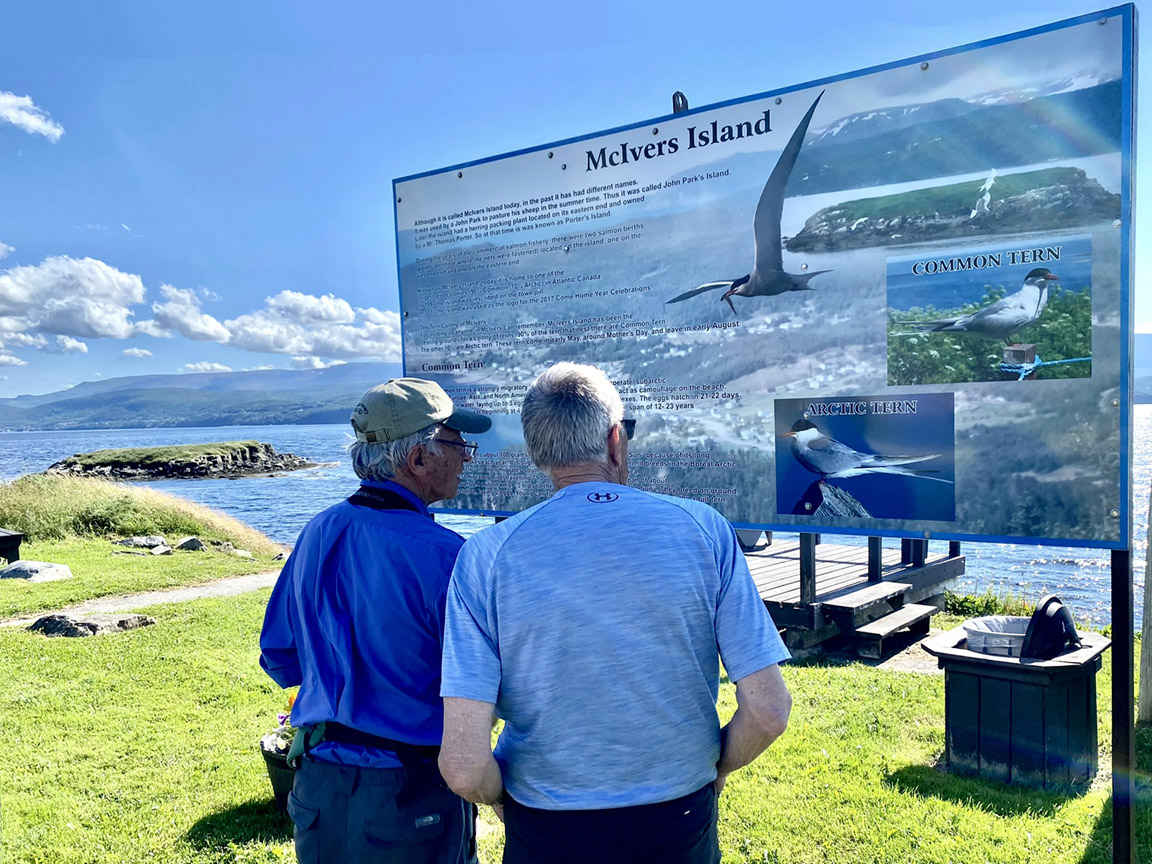
This small island just off Wharf Road is also made of Irishtown Formation but has been colonized by terns, elegant yet agile migratory seabirds that resemble gulls but are much smaller. 90% are common terns which breed in temperate and subarctic regions of North America, Europe and Asia and lay up to 3 eggs, which are incubated by both sexes. The remainder are slightly smaller arctic terns which typically breed in the Boreal Arctic and High Arctic and lay 2 eggs between their approximately 70,000 km round trip to Antarctica, the longest migration of all birds. They live up to 30 years, while common terns may live to 23.
Access
McIvers (Tern) Island is easily viewable from the interpretive sign on Wharf Road and is not within walking distance on low tide. Park near the ball field at the end of the road.
Colette Urban Memorial Trail (49.03899N / -58.09988W)
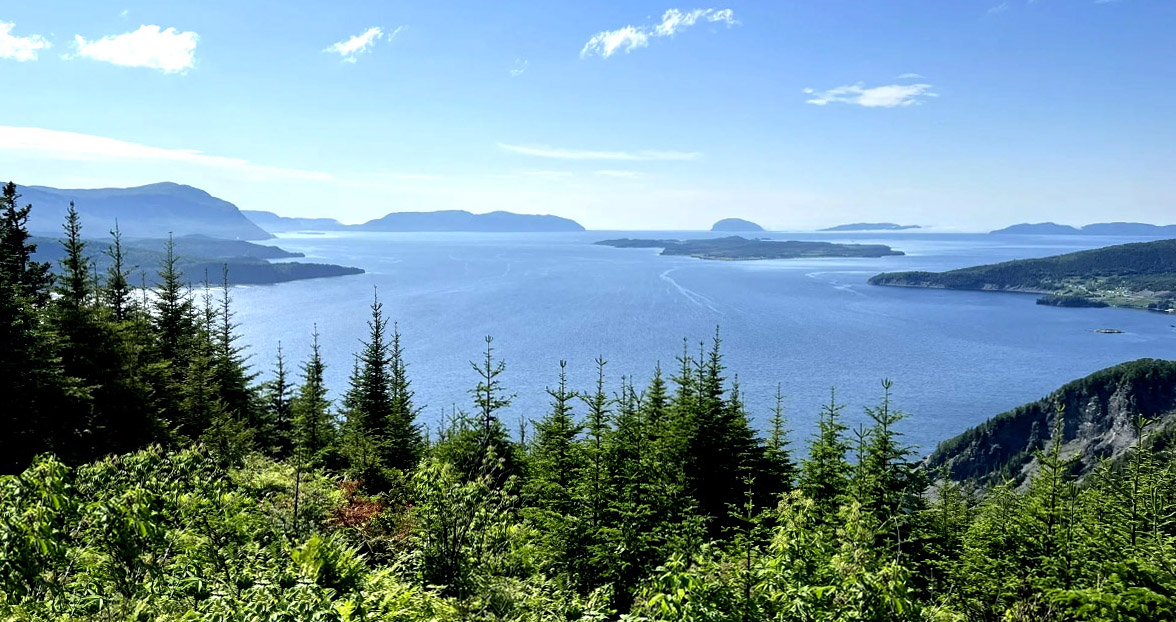
This 1.8 km (one way) easy to moderate trek is located on top of Burnt Hill just east of McIvers. The lookout at the end of the 80 meter ascent provides a spectacular view of McIvers and the outer Bay of Islands, as well a picnic area that allows hikers to linger a little longer enjoying lunch with a view.
Access
The trailhead for the Colette Urban Trail is located just off Route 440 on top of Burnt Hill. Park in the small parking area nearby.
Geo Finder
The town of McIvers is located on the north shore of Humber Arm, Bay of Islands, approximately 30 kms from the start of Route 440 at Ballam Bridge in the city of Corner Brook.
|
|
|
Filters
|