Bay of Islands Ophiolite Complex
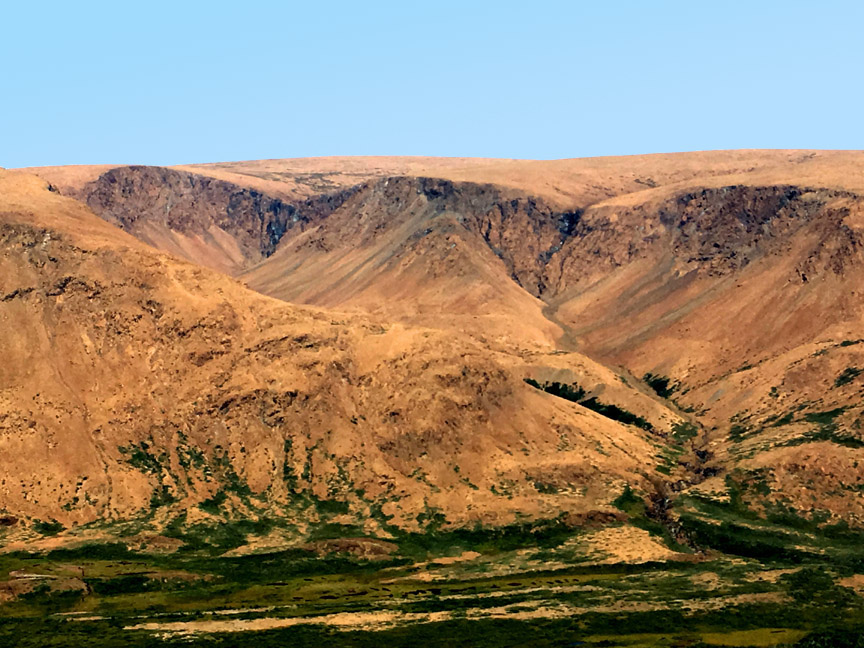
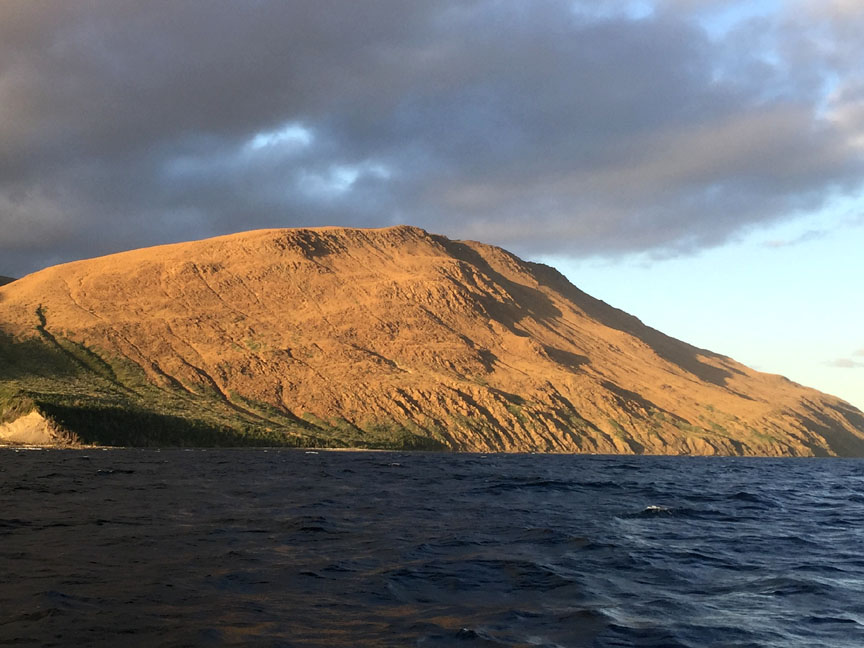
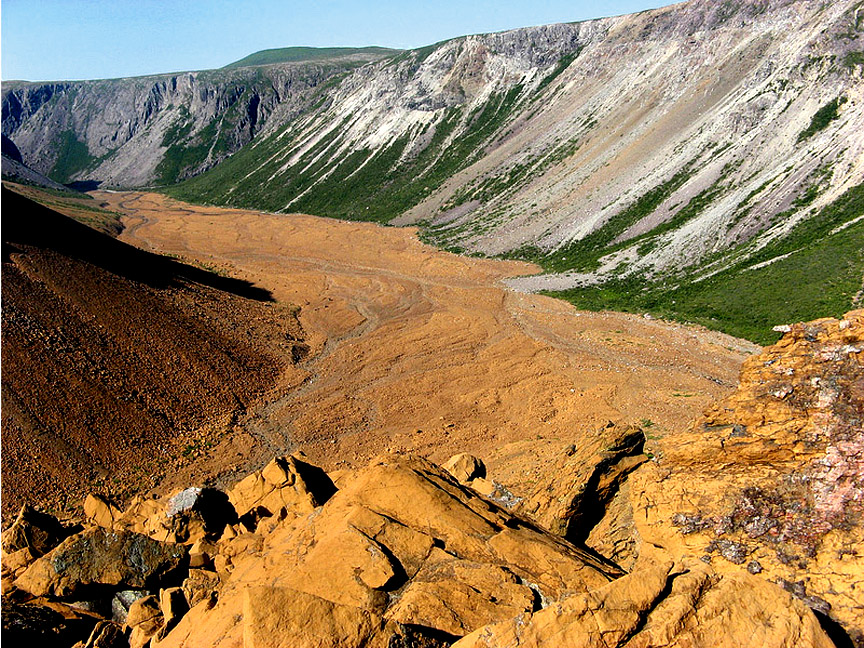
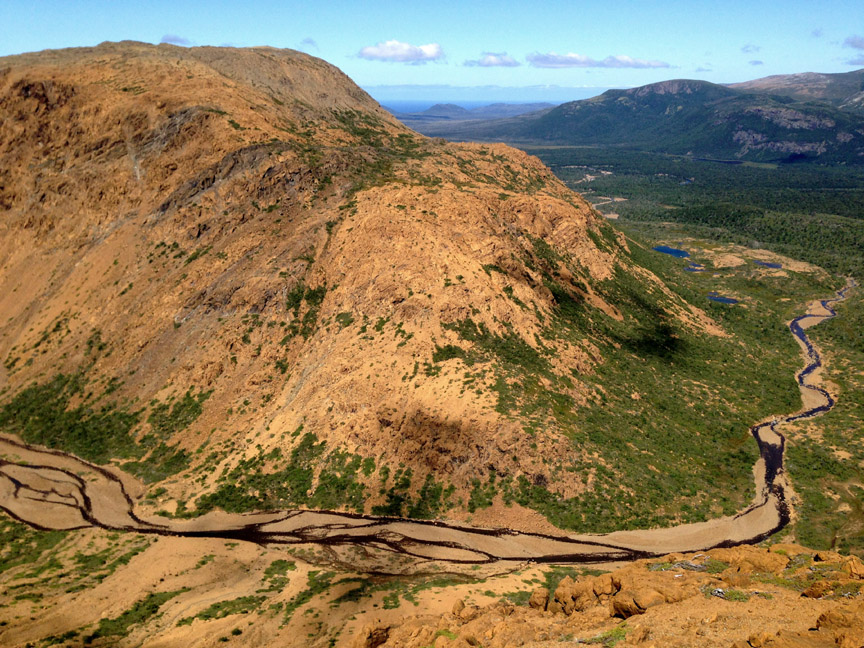
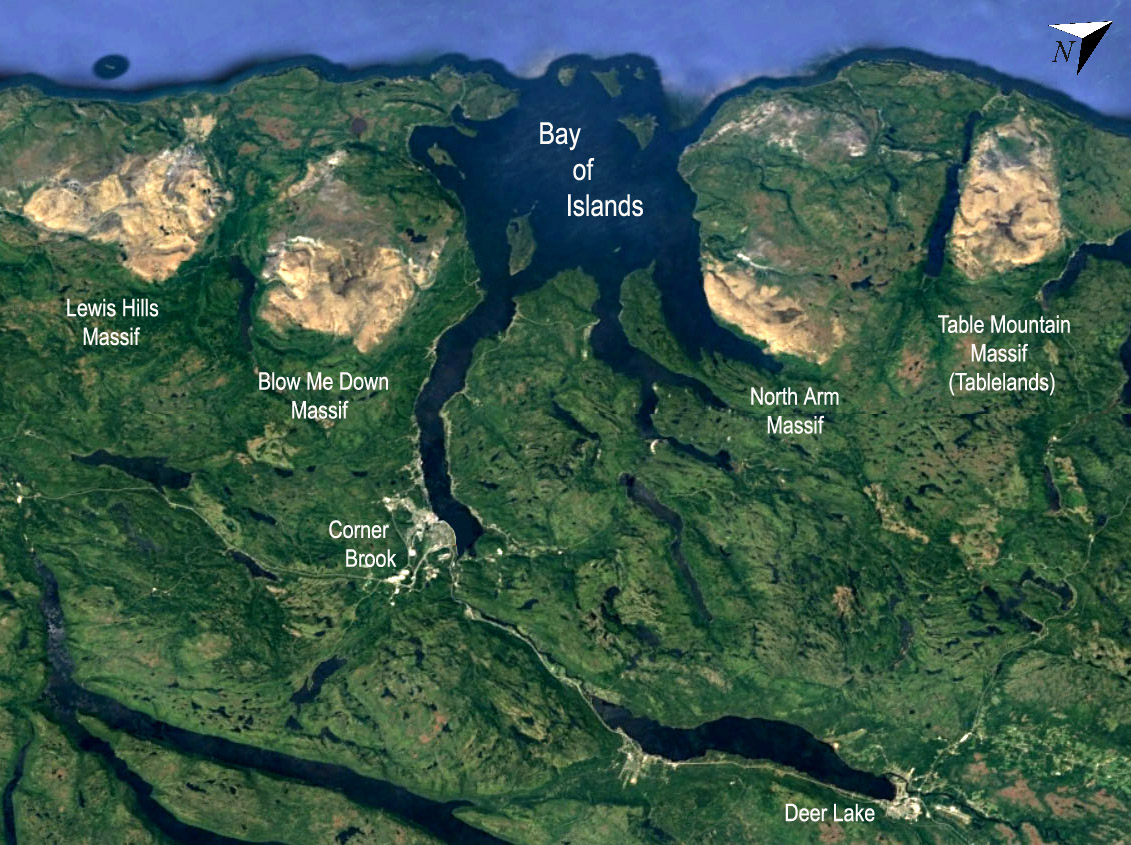
The Bay of Islands Ophiolite Complex is the most spectacular feature of Cabox Geopark, forming high upland plateaus and dissected mountain ranges composed primarily of rust-colored peridotite from Earth’s upper mantle and gray gabbro from the floor of the Iapetus Ocean. It includes four massifs, with two north and two south of the Bay of Islands. The most northerly of the massifs is Tablelands, located in Gros Morne National Park, a UNESCO World Heritage Site. Other massifs include the North Arm Hills/Gregory Mountains (also north of the bay) and Blow Me Down Mountains and Lewis Hills south of the Bay of Islands. Each contain sections of the Mohorovicic Discontinuity (aka Moho), which is the boundary between the upper mantle and ocean crust. The Blow-Me-Down Mountains and North Arm Hills contain the most complete ophiolite sequences, but many are remote and only accessible by boat and/or hiking trail routes, including the International Appalachian Trail Newfoundland and Labrador (IATNL).
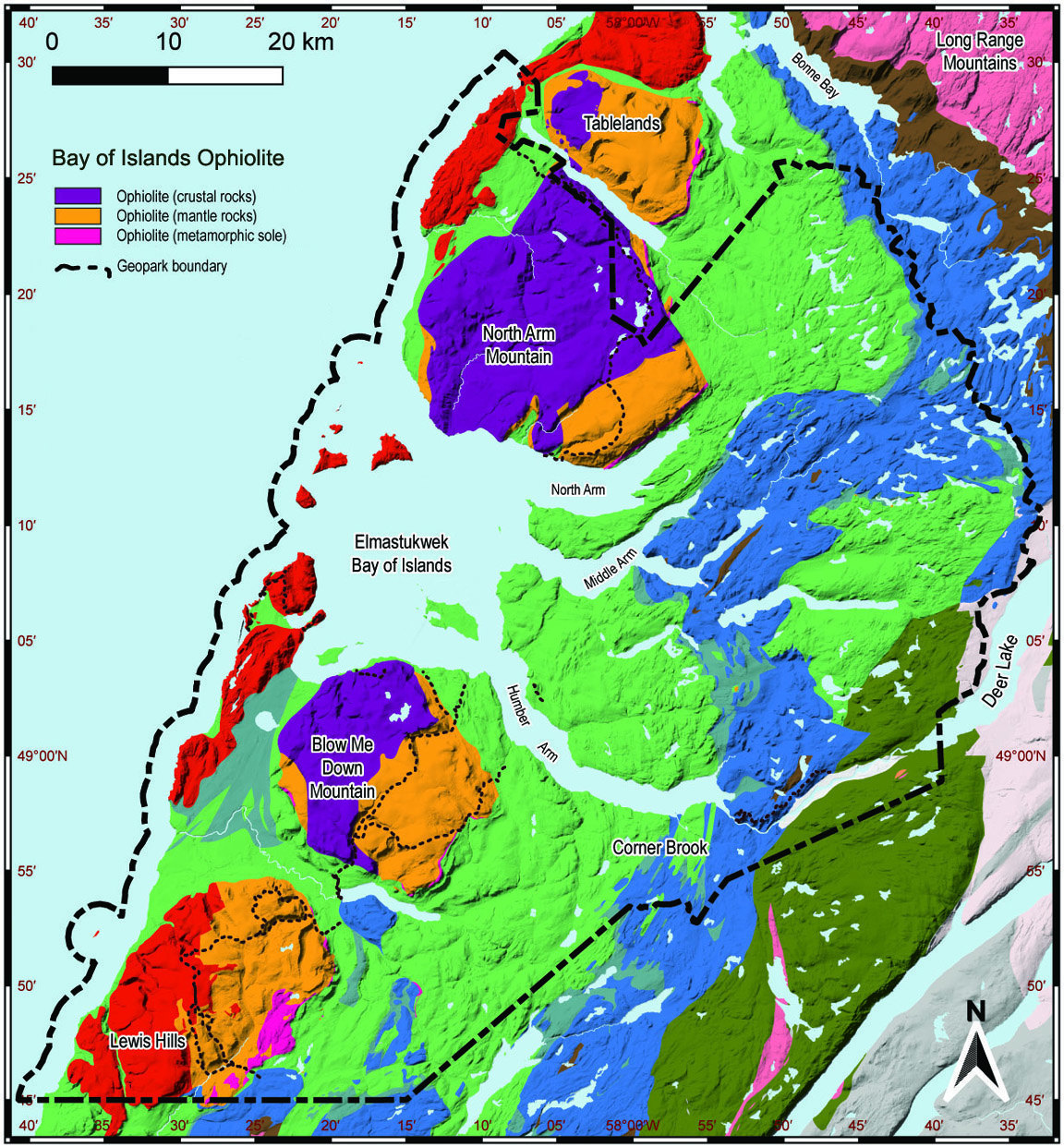
Rock types of the Bay of Islands Ophiolite Complex range in age from Upper Cambrian to Ordovician Periods (approximately 500 to 440 million years ago) and are largely of igneous origin, but include some sedimentary rocks associated with the ancient ocean floor. From lowest to highest topographically and structurally, the massifs consist of ultramafic rocks (harzburgite and dunite), layered to massive gabbro, sheeted diabase dyke complexes and pillow basalts erupted on the sea floor. Felsic rocks representing differentiates of mafic magmas and/or partial melts of oceanic crust are also preserved in some slices. Metamorphic rocks preserved in some areas record the conditions of emplacement of this complex above rocks from the slope succession.
The Bay of Islands Ophiolite Complex represents sections of oceanic crust, likely developed within arcs and back arc basins in the ancient Iapetus Ocean. These have been tectonically transported across the largely sedimentary rocks of the shelf and slope successions. The rocks of the ophiolite provide insight into the nature and structure of the oceanic crust, and are some of the best-known and best-preserved ophiolite suites known in the geological record.