Geological Summary
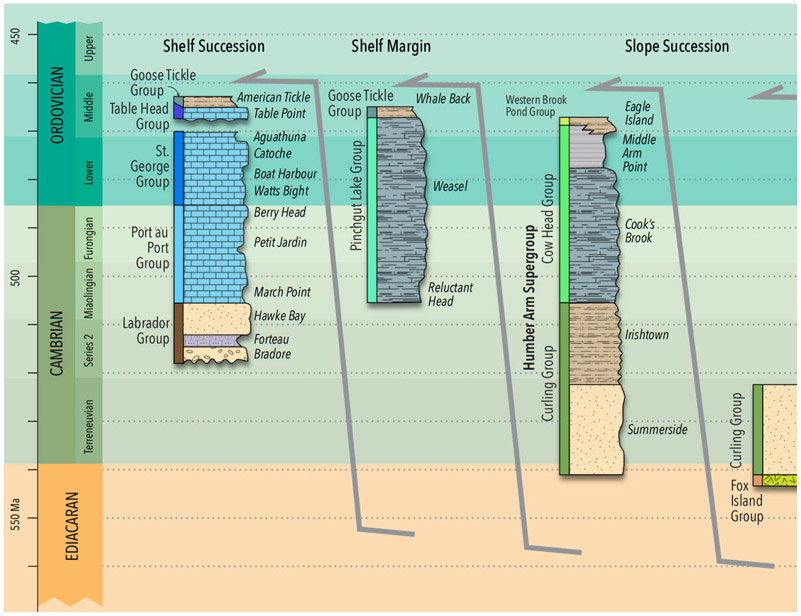
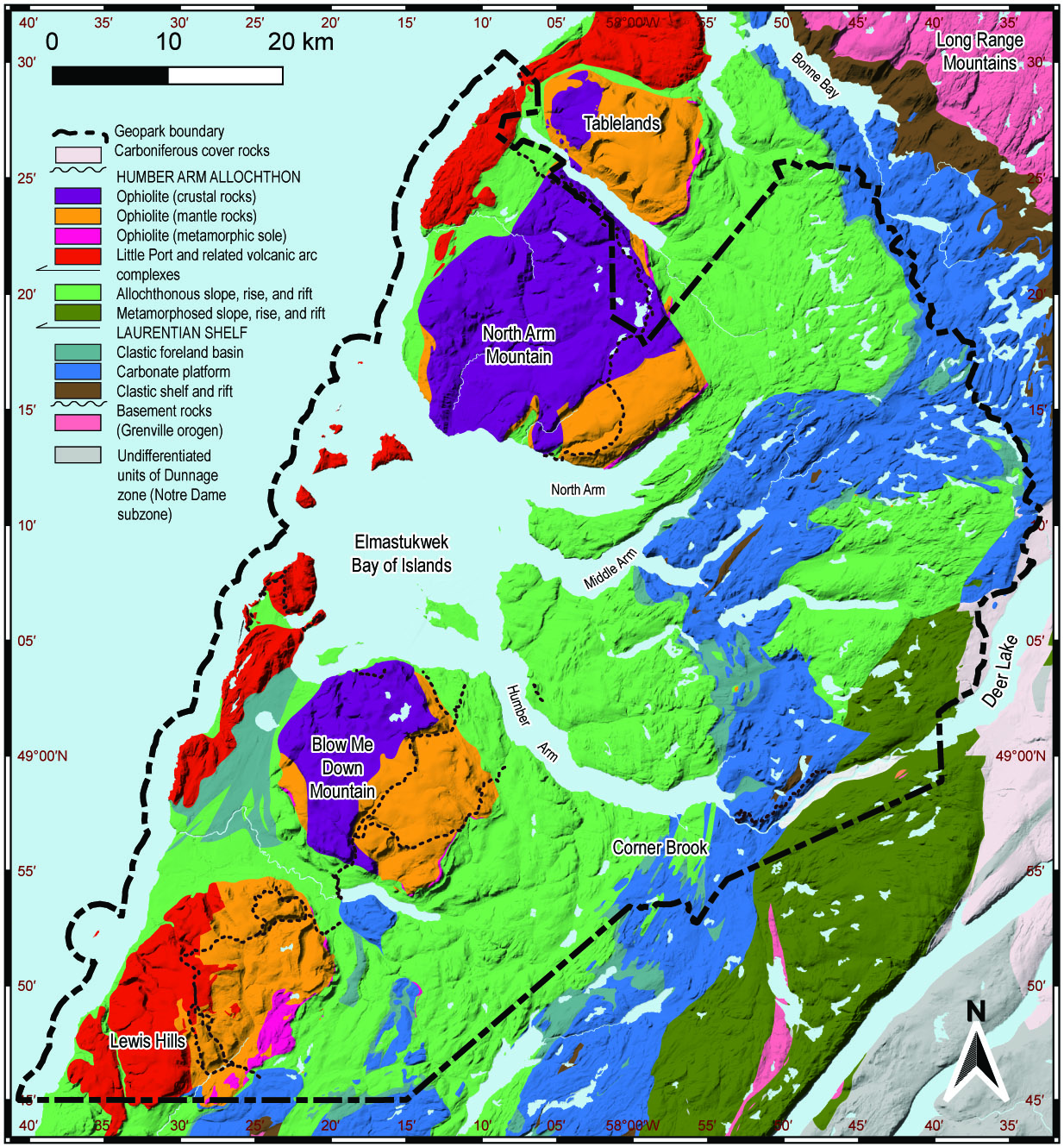
Cabox Geopark surrounds the Bay of Islands (Mi’kmaq indigenous name Elmastukwek) in Western Newfoundland and contains three of the four massifs of the globally significant Bay of Islands Ophiolite Complex, which displays a complete section of oceanic lithosphere from upper mantle to ocean-floor sediment. To the west, the Little Port Complex represents a Cambrian island arc, the oldest evidence of subduction in the Iapetus Ocean. Beneath the oceanic units, sedimentary units of the Humber Arm Supergroup record the Ediacaran to Ordovician continental slope and rise of Laurentia, in turn thrust over a shelf succession recording shallow marine facies spanning the same time interval. The thrust stack records Ordovician arc continent collision and is overprinted by structures generated after subduction polarity reversal and Devonian continental collision during the building of Pangea. These structures are revealed by a classic history of Quaternary glacial erosion, followed by isostatic rebound.
Geological Significance
The Appalachian–Caledonian Orogen has been particularly significant in the history of Earth science, as its European section was the birthplace of modern geology in the 18th century, beginning with James Hutton’s work in Scotland. By the 20th century, the Canadian segment—notably Newfoundland—became central to the scientific revolution that led to the acceptance of plate tectonics. The region’s geological exposures allowed for a first application of plate-tectonic models to orogens, providing critical evidence for processes such as continental collision, terrane accretion and oceanic-basin closure. Newfoundland emerged as a “laboratory” for geoscientific innovation.
Main Geological Features
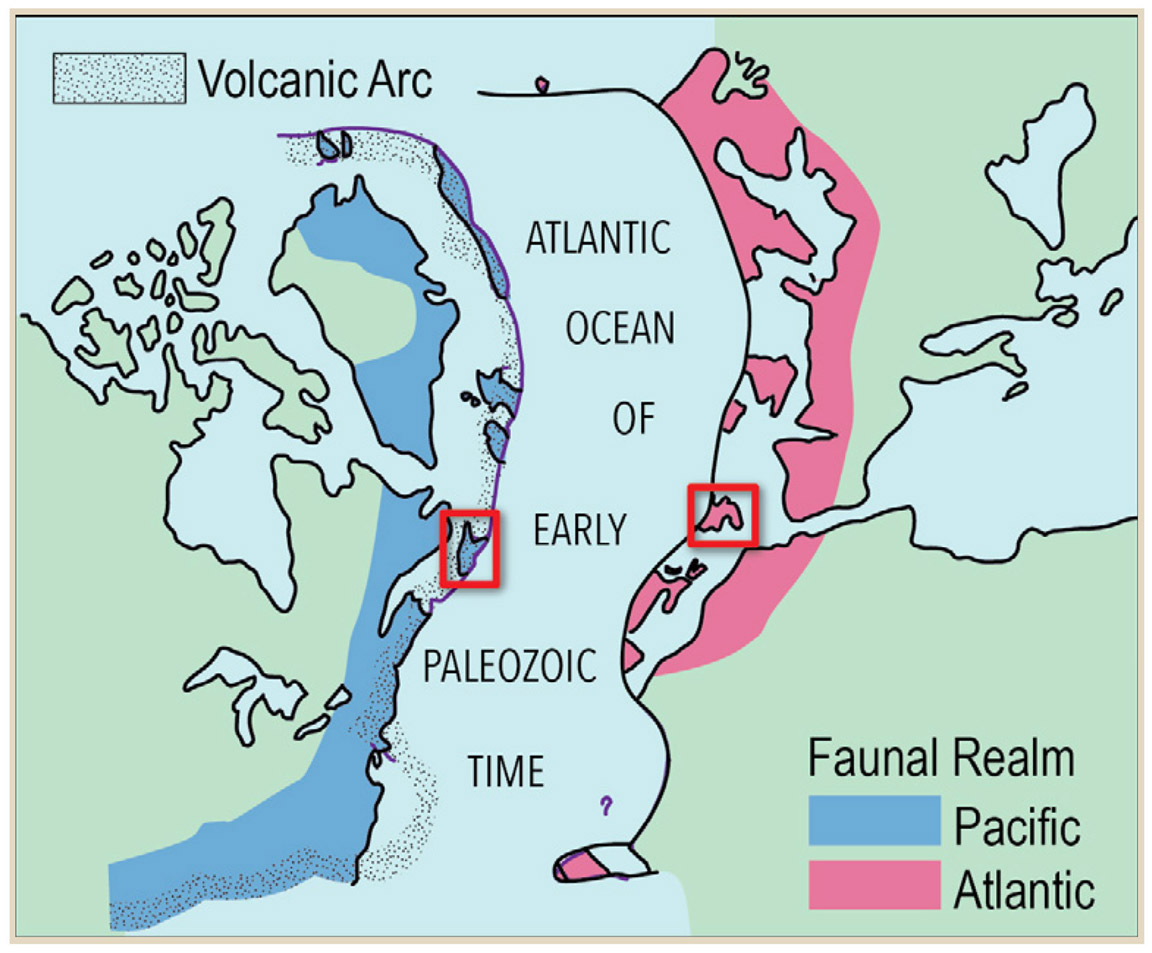
Cabox Aspiring Geopark spans the central features of the Humber Arm Allochthon in Western Newfoundland, including the three largest massifs of the renowned Bay of Islands Ophiolite (composed of oceanic crust and Earth’s upper mantle), the Little Port Volcanic Arc Complex that formed above the subduction zones that closed the Iapetus Ocean, and folds and faults of the continental slope and rise that surrounded the ancient continent of Laurentia during the formation of the Appalachian Mountains. To the east, it includes the carbonate shelf succession that formed on the edge of Laurentia prior to the formation of the Appalachians. The three realms — ocean floor, slope, and shelf — were juxtaposed during the mid-Ordovician Taconian orogeny marking an arc continent collision during the closing of the Iapetus Ocean at the start of the building of the Appalachians, forming thrust faults and mélanges.
General Geological Descriptions
The rocks surrounding Bay of Islands provide a powerful record of the formation and demise of the Iapetus Ocean and the building of the Appalachian Mountains by plate tectonics during the Palezoic Era, when continents collided to form the supercontinent Pangea. The subsequent erosion of the mountains and more recent glaciation over the past 2.6 million years continued to shape the landscape to what we see today. The rocks belong to the following four geological assemblages, which are easily recognizable in the region’s spectacular landscapes: Shelf Succession, Slope Succession, Ocean Succession and Quaternary Features.